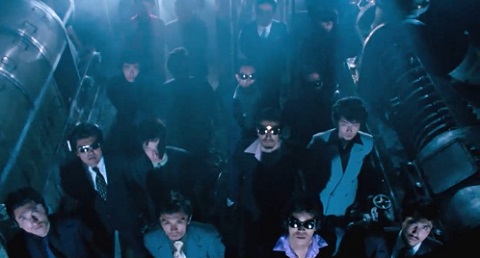
It is the future, and Tokyo has experienced a severe downturn in its fortunes; though a wealthy conglomerate plan to revitalise the area, they wish to do so by building a nuclear power plant, not a popular move with the locals. Those locals prefer to do two things: attend rock concerts and fight. OK, three things, they like to race their cars and motorcycles as well, but the fact remains there is precious little to do in what they now call Burst City to reflect its post-apocalyptic appearance. As the yakuza draw up their own schemes to take over control of the region, the purest self-expression comes from punk rock...
A chaotic film by any reasonable assessment, Burst City was the first film of maverick Japanese director Sogo Ishii to make a major impact, if only on the cult movie scene. He drew on the punk sensibilities of the West yet made them his own with a very Far Eastern take on the whole anarchy and loud guitars aesthetic, and would prove an influence on later, "extreme cinema" exponents from that part of the globe, most obviously Shinya Tsukamoto whose Tetsuo lifted the style of this work and Ishii's others to apply to his better known and more successful, but no less innovative, efforts. His fans may find this one interesting, for that reason.
It should also be noted that Sogo Ishii isn't himself anymore, as in the late nineteen-nineties he seemed to go through some kind of epiphany and changed his name, turning to making more spiritual works that were a far cry from the movies that made him popular among a very specialised audience. Their loss is our... loss, because as his later, and most celebrated film Electric Dragon 80.000 V illustrated, when this director was at his most frenetic and energetic, he could be imitated but nobody was quite like him. Case in point: this film, throwing caution to the wind to have the audience wonder what on Earth they were watching, and if it made any sense.
The answer to that was, eh, sort of, though this was heavy on incident, light on plot for most of the running time. Kicking off with a near miss between two of the biker gang and a car of the executives, it then launched into concert footage as the opening titles appeared, the band seemingly our main characters but with this maelstrom of studded leather and petrol fumes, it was difficult to be certain. After that, it was easier describe this film than it was to make complete sense of it, as a morass of amateur motor races many have described as owing a debt to George Miller's Mad Max 2 erupted onto the screen, with that trademark kineticism that would either have you giddily enthused or giving up in resignation.
What was sure, however, was that this may not have emerged from the more obvious punk rock centres around the world at that time, and indeed had missed the boat as far as catching that first wave had gone, but there was something here that understood the DIY technique could pay dividends artistically, even if such concepts as artistry were anathema to pieces like this. There was an emotional heart, and she was a young woman exploited by the yakuza, but in the main Ishii was far keener on manufacturing that series of crazed, violent, goofy imagery and noise. The last half hour was more or less a mass brawl, as the concert descends into fighting between the punks, the gangsters and the executives' muscle, as well as the cops who show up in black and white armour, wielding some form of bazookas that create huge explosions. And that still doesn't stem the madness. While many would have lost patience long before that, stick this out to the end and you probably found the whole Japanese punk idea pleasing.