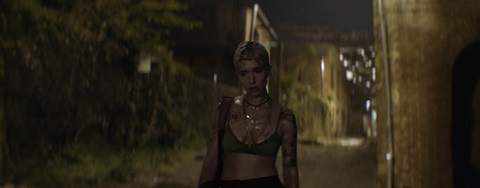
It is the far future, and in this hot and blasted land of the south the main source of income is corralling the local horses to be rounded up and sent to the north, a city which is in almost perpetual winter, but is rich and willing to spend a pretty penny on the animals. For Moira (Jordan Monaghan, among others), getting her hands on a ticket out of this place is her real goal, but then again, it is the goal of all of those citizens who live there and the paucity of available tickets is the most pressing problem for them. It helps if you know someone who is able to gain access, but there's nobody Moira knows that well... until she stumbles across a man suffering from a gunshot in his shoulder in a stairwell, and a whole relationship develops.
Nicholas Ashe Bateman was the filmmaker bringing this one to life, and he had a degree of experience on other films as a visual effects technician (The Green Knight had been one of his), not to mention a small handful of music videos which gave him the confidence to helm his own project. Although it did not look it on the screen, just about every shot here involved an intricate amount of tinkering with the imagery to craft a ruined city, as in fact it was filmed in a New Jersey warehouse other than some Canadian location work. This alone made it worth a look, especially if you wanted to see what was possible on a tiny budget and the imagination to use those video editing tools on your computer to their best advantage over the course of ninety minutes.
Sounds promising, doesn't it? This is where the downside enters into it, for there was much evidence that while the visuals were honed to perfection to conjure a fantastical, post-apocalyptic landscape, as far as the story and dialogue went, there was simply too much lacking. We were meant to be tracking the lives of the characters over the course of decades (hence the deadening intertitle "Thirty-Four Years Later" at one point), but ironically it was very difficult to get to know them, never mind like them, when for a start the milieu they existed in was so alien, and to top it off you could not get a handle on their personalities which mostly went from surly to intermittently cheerful. As you can imagine, this made for a frustrating experience when you just could not get your bearings no matter whereabouts you were in the timeline of the narrative.
Bateman had recruited some vaguely well known indie names to fill out his cast, but when they were largely called upon to mumble their lines into the middle distance, do not be surprised if you found yourself zoning out at regular intervals when another monologue or gnomically meaningful exchange started up. And yet, if you watched movies for their aesthetics, you might get something out of The Wanting Mare, it had a very lived-in appearance that for all its fantasy setting (it seems to be so far into the future as to be inconceivable to twenty-first century minds) could convince as a concept of what life that far down the line would be like, with all its wariness, depressed communities, and random bursts of violence. OK, maybe that's not much different from what it's like now, but at least we still have the internet, which these folks do not seem to do. Emotionally, though there was a late on reunion presumably intended to warm the cockles of your heart, any appeals to the heartstrings were stifled by the uncertain hand on the scripting. There was a suspicion this style would be more appropriate for a music video (such as Bateman's Father John Misty jellyfish one). Music by Aaron Boudreaux.
[The Wanting Mare is available to rent or own on digital HD from Bulldog Film Distribution on 7 February 2022.]