It seems like just another ordinary day for a Palestinian family whose house is situated in the countryside between an Israeli settlement and a Palestinian village. Father Mohammad (Mohammad Bakri) is a schoolteacher, a strict but supportive man who wants to see his children do well in their studies so they can have the opportunities in life he was denied. However, eldest daughter Mariam (Hend Ayoub), despite her excellent exam results, doesn't wish to take the chance to study in Germany, no matter how much her father wants her to. Yet the conventional family squabbles are soon forgotten that night when their home is broken into by a platoon of Israeli soldiers - soldiers who plan to stay a while...
The conflict between the Israelis and the Palestinians is a touchy subject, so perhaps that is why Private features an edgy atmosphere from the start. Based on a true story, its central idea of home taken over by hostile trespassers, who in turn are not much liked by the family, is obviously a handy metaphor of the conflict on a smaller scale, and while it feels a little contrived at the beginning, the film grows into this notion with some ease. It's not difficult for much of the world away from Israel who don't have friends or relations there to wearily dismiss this situation as just another depressing story on the news, but Private gives both sides personalities to identify with.
However, it's mostly the Palestinians' point of view the film takes, as it's the family who are the central characters. Mohammad is determined to stay and doesn't want to fight back with physical violence against the soldiers, much to the frustration of his elder children, especially Mariam. After breaking in, the soldiers lay out their demands and conditions: the house is divided into sections, with the family only being allowed to stay downstairs and the upper part of the house is forbidden to them; at night, the family are locked in the living room to sleep. The children react in different ways, with the youngest girl becoming withdrawn and refusing to speak, while the elder children find ways to rebel.
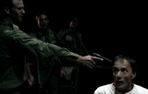
Director Saverio Costanzo, who co-wrote the script, keeps the circumstances as claustrophobic as possible, even though the family are still allowed out to go to school or work - everything takes place in or around the home. He also handles the occasional bouts of chaos well, as when the soldiers find out that the family have ventured upstairs while their oppressors have been out and the platoon commander (Lior Miller) drags Mohammad out into the garden and holds him at gunpoint, leaving us wondering for suspenseful seconds whether he will shoot him or not. Scenes like these enhance the thriller aspect and make the drama all the more vivid.
Things get even more tense when Mariam decides she wants to know more about her captors and sneaks upstairs to spy on them unseen. She ends up hiding in a wardrobe and eavesdropping on the soldiers, which gives an opening for the filmmakers to add depth to the Israelis, who don't seem entirely happy with the situation themselves, although they won't admit it to the Palestinians they are ordering about. All the while one of the sons is designing his own trap with a hand grenade he has stolen from the soldiers, set up in the greenhouse - will it go off? The handheld photography lends an immediacy to the proceedings, but can't quite shake the sense of watching the equivalent of an issue-of-the-week TV drama, and the plaintive song over the ending ditches all subtlety to cringemaking effect. Still, it's a brave attempt at dealing with thorny problems. Music by Alter Ego.