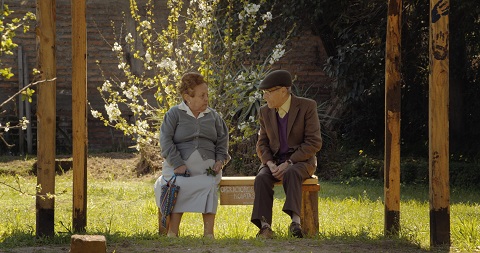
A newspaper advertisement has been placed in Chile requesting the services of a man between the ages of eighty and ninety who has all his faculties and will be able to act as a mole in a nursing home to discover whether there have been abuses taking place there. The investigators, who are posing as documentary filmmakers to better infiltrate the establishment and record their plant, settle on Sergio Chamy, an octogenarian who has recently lost his wife and would like to immerse himself in a new project to take his mind off his grieving. But he has an unexpected effect on the residents, purely because he is lucid...
The Mole Agent, or El Agente Topo as it was called in its native Chile, was a widely acclaimed documentary that was nominated at the Oscars, though the gong eventually went to My Octopus Teacher, a home movie about a man pestering a sea creature for months on end and imagining some kind of bond with it. But this more human story was also accused of presenting a distorted picture of reality, especially when the makers admitted they had staged and contrived various situations all the better to create the narrative they were hoping for. In both these films, the questions arose: how ethical were they?
Once Charmy is in position as the agent, after an interview process we see that may or may not have played out like that, he sets about his mission, instructed to work out where the woman he was supposed to be keeping watch over was located and send back daily reports on his mobile phone to the detective overseeing the operation (who it should be noted, was accused of illegality in a separate set of circumstances one filming was over). This proves tricky, as we find out she is mostly spending her days in bed and when she does emerge from her room, she does not want to converse a tremendous amount with her fellow residents.
Meanwhile, there were interesting things occurring around Sergio with respect to the effect he was having on the almost entirely female population of the home. The investigation goes out the window for the most part, almost as if it was merely an excuse for a premise, when the film's heart truly lay with exposing a reality of what it was like to exist in these care homes. Sergio has many of the ladies falling for him, partly because the few other men there cannot hold conversations anymore, but also because of what emerges as the actual theme of the piece: the residents are desperately lonely and neglected. Not by the staff, however, but by their families, who simply abandon their elderly relatives in these residences and leave it at that.
If you were being starkly unsentimental, you might observe these little old ladies have been left there to die, and indeed are as good as dead because the families have no interest in them anymore, they have served their purpose and are no longer needed. Despite the suspicions that what you are watching has been, if not invented wholesale, then manufactured in a way that helps a drama along to bring out the message, an accusatory message at that, there were moving scenes, and funny ones too. Some of the patients are senile, and one of them, while she can hold a conversation, is losing her memory and this distresses her, though others are well aware of what has happened to them and how lonely they are for contact from their families. Therefore what you had was a false construct that spoke the truth: when you reach an age where you need help to carry on, you may well be relegated to the scrapheap of life, even by those who you thought loved and appreciated you. While there was sweetness here, there was something uneasy about The Mole Agent too, though the pandemic, as well as this film, returned attention to care homes and began to see the residents focused on more.