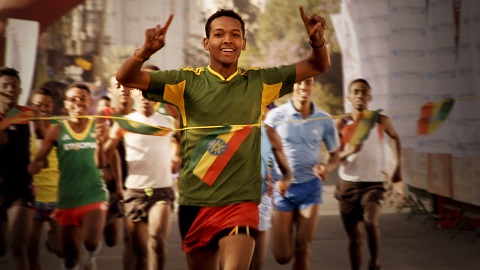
Some years ago, when Abdi (Ashenafi Nigusu) and Solomon (Miklas Wolde) were boys in Eastern, rural Ethiopia, their village was visited by a photographer who entertained the locals with a project he was working on to record the denizens of the nation outside of its capital Addis Ababa. As it turned out, the two boys were so enchanted that they accompanied him back to the big city and were shown the sights, though Solomon was more captivated than his friend, and ended up stealing one of the photographer's cameras and opting not to return to the village, instead staying on as a street kid, scraping a living in the urban environment. They have not seen each other in ages, but will fate bring them together as adults, Abdi now a runner and Solomon still on the streets?
Ethiopia is well known for its athletes, and indeed one of them, Haile Gebreselassie, showed up halfway through this to offer an inspirational speech at a press conference where Abdi has just won a national championship. Sports fans would be happy to see him, even if for a minute or two, for they may have settled down to watch Running Against the Wind under the impression it was a film about athletics, which it partly was, yet in truth it was difficult to say what it was about other than the sort of limited "aim for your dreams" platitudes that you would get in your average CGI cartoon of the past twenty years. Otherwise, it was all over the place, veering from social realism to gangster flick to romance and more, never alighting on one subject when it could try and gather ten at once.
There were compensations, and director Jan Philipp Weyl (screenwriting with Michael Wogh) did a very good job of making Addis Ababa look like a very exciting city to spend time in, if a little dangerous should you decide to go exploring without really knowing where you were going. It sounds like a cliche, but the local colour did make up for a lot of the deficiencies in the rest of the movie, and that included some limited acting from the two leads, Abdi being portrayed as taciturn but in effect more robotic, and Solomon more human but not really someone you can support given the wrong turns he purposefully makes in his life when the correct path seems obvious to us, if not him. Abdi was not offered as much of the screen time as his erstwhile pal, so mostly we wondered why he does nothing to respond to the blatant interest a beautiful model shows in him.
While making a campaign advertising condoms, no less. Solomon already had love interest with girlfriend Genet (Samwarit Desalegn - also beautiful, so er, thanks, casting director), the woman he has grown up on the streets with and encourages him in his pursuit of photography as he still has the broken-lensed camera he nicked all those years ago. They also have a tiny little daughter together who is on hand for heartmelting pronouncements, so there's being a shutterbug and being a responsible parent to add to the concerns this movie was roping in to its running time (it was well seen it lasted a good couple of hours). There was even more: how about a condemnation of black on white racism (the director, who appears, was white) or a few bundles of cash to add some intrigue to the eventual reteaming of the now doing very well Abdi and the desperate Solomon? You could reason the morass of plotlines and themes here were intended to reflect the vibrancy of the African city experience, but after a while you did wish it would land on one aspect and stick with it. An athletics drama from this part of the world would not have been such a bad idea. Music by Teddy Mak and Stefan Postavka.
[There are no extras on Eureka's Blu-ray, but pic and sound are fine. Available from August 9 2021.]