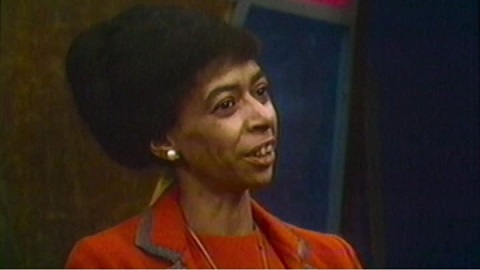
When Marion Stokes died in 2012, she had been out of the public eye for many years, and even so it is unlikely the vast majority of people would have remembered she had been on television some time ago, on a public access discussion show. But a project she had been conducting got her back in the news: her obsessive recording of television, mostly news but other programming as well, that she carried out over the course of over three decades, on multiple VHS machines. That was not all she kept, as she also had a collection of newspapers, books and her beloved Apple computers, all of which would be valuable to cultural historians, but it was those tapes that truly caught the imagination...
Your first thought may be, well, what's the big deal, when television stations keep copies of their archive as a matter of course? The answer to that is, no, they do not, for a start the technology needed to play reports from the pre-digital era is not easily accessible anymore, and many stations simply wiped their tapes or never thought to keep anything except the biggest news stories on their files. Marion's real trigger moment came when the Iranian hostage crisis was unfolding over many months at the end of the seventies, which in turn inspired the rolling news services we have today, for better or worse. As a civic-minded person, she felt it was her duty for posterity to keep these broadcasts to be pored over by future generations.
Director Matt Wolf had access to her tapes, so you might expect this documentary to play out as a compilation of Marion's collection, and there was an element of that as many reports, both major and minor, are seen in clip form. But he was obviously keen to learn about the woman behind this project, and so much of this is presented as a biography with interviews from family and staff - she did not seem to have any friends to speak of. Her background was one of an adopted black child in the Depression years whose feelings of abandonment by her mother appear to have seriously troubled her, and this sense of being left behind is an explanation for what psychologists would term hoarding. But not every hoarder had Marion's funds: she was pretty well-off, and that was mainly down to her husband, John Stokes.
He was from old money and found a lot in common with Marion when they met on her television show, to the extent that they fell in love later in life (we see her first husband, a socialist activist in keeping with her political beliefs) and began a relationship of close intimacy, to the exclusion of their existing children. They are interviewed too, and have mixed feelings about Marion, to put it mildly, from what we can discern she was in possession of a very forceful personality, able to dominate everyone around her. Yet she remains an enigma at the heart of the film, probably because she could not have offered an explanation of why she was recording so much that went beyond the superficial obsessions that would have waved away the motivation. Considering she spent much of her life watching television and reading, she really should not be as intriguing as she is, she seems like the prototype media junkie, but then again maybe she was a template for the future as much as she was a product of that media over the course of a lifetime. Music by Owen Pallett.