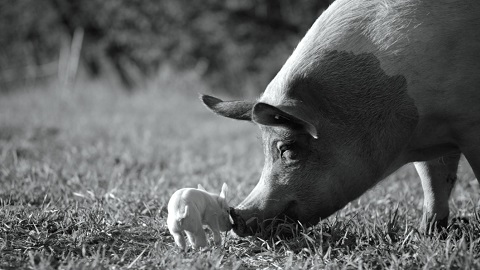
Gunda is a pig, and she lives on a free-range farm where she has recently given birth to a litter of piglets. She allows them to suckle as she lies in contemplation of the world outside her barn, grunting contentedly as her offspring squeal and murmur while trying to find a teat to gain nourishment from. They will have a happy life on this farm, even within the confines that the farmers place on them, as will all the animals which stay there: but the good times have to come to an end eventually.
This was the product of Russian documentarian Viktor Kosakoskiy's interest in recording nature, though the cynics could debate precisely how natural the environment we witnessed here actually was. No matter where these animals go, there is evidence of humans: the pigs and cows even carry tags on their ears to identify them, not to other pigs and cows, but to their owners. Then there's the fact they stay in manmade buildings, and have their movements restricted by fences, some of them electrified.
But the, er, elephant in the room (so to speak - this isn't an elephant farm) is what will happen at the conclusion of the film. We all know that many people find pigs, cows and chickens mighty tasty, and we also know those people never consider the existences of the creatures they are eating, because why would you if you wanted to enjoy your meal? Gunda was not exactly a pro-vegan tract, it had to be said, as there was no sentimentalising of the animals we were watching, and carnivores could come away from it feeling their conscience was clear.
That is if they do not think about the consequences of their food too much. The chickens we see, apparently released onto an animal sanctuary that looks after beasts that have been part of the factory farm system, are not in great shape, with patchy feathers, a demeanour of low-level terror, and one of them is missing a leg, so it is pleasing to see them explore a field for what presumably is the first time in their lives. You may wonder why they were not slaughtered at least for a batch of chicken nuggets, where it doesn't matter if the birds were in a bad way as long as you could get some meat from them.
But that is because there is some compassion in farming, and for a while we can believe the animals are in the best place for them: they are being treated well, they have a location they can investigate, they are guaranteed meals, and so forth. But humanity can take away just as easily as it can giveth, which led us to how this drew to a close. Up until this point, the director has served up a selection of pin-sharp monochrome images of the subjects, which can be kind of fascinating if you're so inclined yet make no attempt to win over the less convinced. However, after spending all this time with the pig and her piglets (ominously, there is no daddy pig to be seen) the inevitable happens, and we are left with the image of Gunda essentially crying "My babies!" as she is abandoned thanks to the demands of modern meat eating. If that doesn't make you feel a little guilty, even if you don't eat pigs, cows and chickens, or any other animal, then congratulations on your heartlessness.