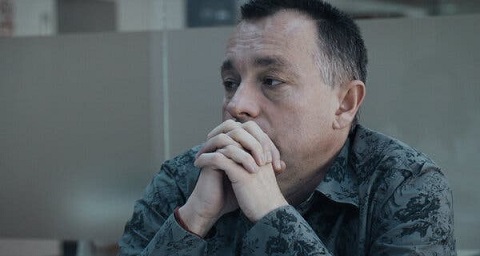
In 2015, a rock band were playing at Bucharest in Romania's popular club Colectiv when their pyrotechnics started a fire on the stage. Suddenly, the room was ablaze, and so were the audience: twenty-seven people were burned to death in a tragedy that would only become worse over the course of the next few days. This was because, incredibly, victims taken to hospital to recover began to die in the very place they were supposed to be receiving treatment, with thirty-seven more of them dying from apparently survivable conditions. Soon the authorities are being asked rough questions, but if anything, the answers are rougher, as it is revealed the levels of corruption in Romania that have led directly to these deaths are bone deep in their society...
A documentary about Romanian politics may not seem like an appetising prospect, and it was true Collective was a tough sell, especially when it contained images so distressing - not consistently throughout, but every so often, starting with the phone footage of the original fire that started off what should have been massive reform until it became clear the mobsters were simply too powerful and the old boys' network too entrenched to be rid of by a simple change of government. Director Alexander Nanau had a pair of heroes for his first half, sports journalists Catalin Tolontan and Mirela Neag who were decent enough to listen to the whistleblower in the hospital who exposed the scandal of the disinfectant being so diluted by the pharmaceutical company that it was next to useless.
Thus the survivors of one death trap had escaped straight into another death trap, and of the hundred and eighty who did get away in whatever state, it was horrendous that so many should have died afterwards. Nanau did follow one of the living, though severely injured, survivors, the artist Tedy Ursuleanu as she recovers, has a prosthetic fitted, and becomes an emblem when she turns herself into an art project showing off her burns, and her subdued kindness was in stark contrast to the callous, "only out for themselves", pocket-lining politicians and mobsters who do the best they can to cut off any reform. That it took sport reporters to shame them, at potential danger to themselves and their families, was just one aspect of how from some angles the story looked absurd, until you remember the images of the crying relatives who have lost loved ones.
The second half, once those journalists have identified with keen precision what the real issues are amid a fog of obfuscation from the bad guys, was given over to a new hero, Vlad Voiculescu, who is the replacement Health Minister for an interim government assembled to run the country until the elections, when public outcry overwhelms even these supposed populists who were using nationalism to pull the wool over the eyes of the population. Yet at every turn, Voiculescu struggles to make any kind of improvements since the system has been so bastardised by the criminal activity that cares only about money and power, and the ending, where he is - spoilers - defeated by the resurgence of the nationalists is sure to make you angry until you are reminded they are the ones who turned a blind eye to any fire safety regulations in that club, or any sanitation regulations in that hospital. Then the despair sets in, especially if, as appears to be intentional, you look to your own country and see the populists and nationalists using patriotism to get away with terrible behaviour because patriotism excuses all for a large proportion of the population. Not an easy watch, but presented with commendable restraint when it could have been insane with fury.