A couple fly in a loving embrace through the clouds above the Earth, looking down at the landscape below. Another couple view the skies above the city and note the geese are flying south for the winter, for it is now September and the nights will be drawing in. Meanwhile a man emerges from an underground railway station into the street to inform us he met a man he once knew years ago when they were in school, but he was blanked by him, probably because back then the man speaking used to bully him mercilessly. Yet he is baffled his former victim wouldn't want to bid him hello in return...
About Endlessness was, apparently, the final film of idiosyncratic Swedish auteur Roy Andersson, and it appeared to be much the same as his previous films in the same vein, a series of loosely connected sketches building to either a deadpan but absurdist punchline, or a grim observation about human nature and the depths it can plumb. But actually, at last this work saw him moving forward, subtly altering and building on his previous efforts and even being brave enough to dispense with his foundation of humour for many of the vignettes to see if he could attain profundity through punishing experiences.
That these experiences do not evolve from anything other than an existential terror that perhaps everything we do is futile when it is all leading to our deaths, and eventually the human race's extinction, be that by our own hands or the results of a natural disaster, did draw on what his other films had been concerned with did not mean he was dismissing his previous conclusions. But what it did mean was that as Andersson himself went closer to his own demise, he was seemingly reaching for a sobering clarity as to what endlessness, which we are taught the universe is lasting for, may entail, and the musing that existence may never end, but that didn't mean we were a part of it.
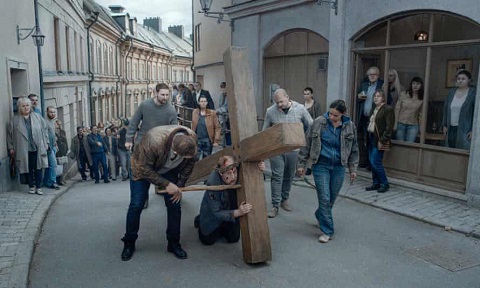
Were we insignificant, or did our ability to ask these questions indicate we would somehow endure when you considered the summits of our art and thought? Maybe that did not matter anyway. Yet Andersson considered this in a variety of ways, including his trademark comedy, most memorably when a man visits a psychiatrist repeating that he does not know what to do now he has lost his faith. Unfortunately for him, it's closing time at the practice and the shrink wants to catch his bus, so he and his secretary bundle the would-be patient out of the door and hope he will go away. If you thought this was a horrible little skit, you were not going to get on with Andersson; however, if it really made you laugh, you could be comfortable in the knowledge that at least you got the huge cosmic joke he was alluding to.
It would be cold comfort, naturally, because you would still be awoken to the issues the director was raising, and a realisation that there was nothing you could do about it, but while there were sequences detailing similar losses of faith, often massively justified - the priest who gets hammered on communion wine, Adolf Hitler perhaps realising at last the consequences of his dreadful acts, his army being marched off to Siberian prison camps (a remarkable bit featuring countless, trudging extras) - there were also reasons to be cheerful. There was a short musical section where some young women danced outside a café, utterly spontaneously, because they were full of the joys of being in a way that Hitler decidedly was not, and it shone like a beacon of hope for the future, a future eventually all of us would no longer be a part of, except as a teenage boy explains to his girlfriend, all energy becomes something else, so we could end up with our atoms becoming a potato or a tomato (!). There was a sense that at last, after all this searching and observing, Andersson had hit upon something substantial and relatable to us all, it was simply a matter of understanding what he was getting at.