| |
Harakiri
|
|
| Year: |
1962
|
|
Director: |
Masaki Kobayashi
|
| Stars: |
Tatsuya Nakadai, Akira Ishihama, Shima Iwashita, Tetsuro Tamba, Masao Mishima, Ichiro Nakatami, Kei Sato, Yoshio Inaba, Hisashi Igawa, Toru Takeuchi, Yoshiro Aoki, Tatsuo Matsamura, Akiji Kobayashi, Koichi Hayashi, Ryutaro Gomi
|
| Genre: |
Drama, Action, Historical |
| Rating: |
  8 (from 1 vote) 8 (from 1 vote) |
| Review: |
The year is 1630, and peace has settled on the land of Japan. This is good news if you don't want to get killed in a war, but those who would customarily do the killing, the samurai, are now at a loss, for their services are not required. This leaves many ronin, masterless samurai, roaming the country barely scraping a living, and some are reduced to giving in to their shame and poverty by courting the seppuku, or ritual suicide. Except for most of them seeking out their old employers to allow them this ceremony, what they actually want is to be told they shouldn't commit suicide, and be given some money to support them instead - and some clan heads have had enough.
Harakiri was originally called Seppuku, but the Western name was used outside of Japan because it was more familiar there, though they both mean the same thing, the Western version closer to slang. But it was not technically a suicide movie, not as it appears to be in the first half, if anything it could more accurately be termed a murder movie once we discover what is really going on, and the director Masaki Kobayashi had far more on his mind than simply recreating rituals from his native land in days of yore. He had lived through the militaristic drive of the Second World War and hated every minute of it, as the ideals of the Japanese authorities were miles from his own.
Therefore he constructed his historical melodrama as containing two meanings, or possible readings, either as a samurai flick of which had been traditional in his nation's film industry, as the Western had been for Hollywood or the kung fu movie had been for China and Hong Kong, or as a savage takedown of the values that had brought so much misery to his countrymen and women throughout the twentieth century. In the nineteen-sixties, there was a movement, which included a student uprising witnessed around the globe, to criticise and attempt to sweep away the old guard, and this effort was a part of that, though Kobayashi was a lot older than the average students.
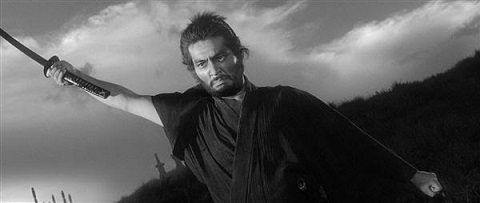
Nevertheless, he captured a zeitgeist, to use that cliché, in his barely contained anger at the waste a military outlook creates when applied to governing, though his protagonist, Hanshiro Tsugumo (Tatsuya Nakadai), initially comes across as loyal to the cause, yet enervated by its demands. When he shows up at the base of the Iyi clan, he says he wants to commit seppuku and they react like, oh yeah, this again, well we can tell you what happened to the last guy who arrived here and requested that. What happened? As it is explained, he seemed to be wishing to go through with it until practically the last minute when he realised they were going to force him if he got cold feet, which in this flashback leads to one of the most gruesome and unsparing scenes of its decade. However, Hanshiro is unmoved.
Or so he looks, but he has an agenda that nobody could have suspected, which casts the clan, the whole system of samurai and all the baggage that goes with it, into a very bad light. So much so that if you ever enjoyed a samurai picture, Kobayashi's stylings here makes them all clearly celebrate a tradition that was a bastardisation of honour and decency; obviously the more cynical exponents were on a similar page to him, but his pacifist beliefs were far stronger in this portrayal than anything possibly before or since. Just as Blazing Saddles destroyed the Western by laughing at it, Harakiri took a bushido blade to the samurai movie by going in the opposite direction, growing ever more furious the further it went on. There was a truly horrible twist part of the way through this that really should have shaken up any idea of the nobility of organised, official violence for good; sadly, we have never left that behind, but while this took its own sweet time in getting to the point, the rigorous clarity of its conclusions was brutally honest. Music by Toru Takemitsu.
|
| Reviewer: |
Graeme Clark
|
| |
|
|


