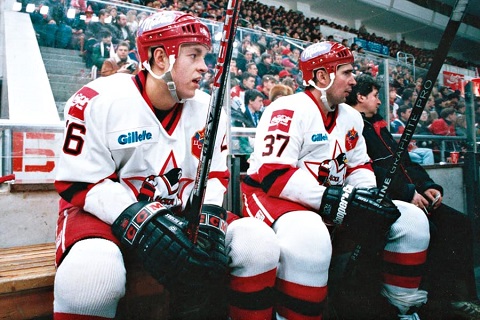
When the Soviet Union failed at the end of the nineteen-eighties, it was expected that a democracy would be the result, but with that came capitalism which the Russian society was not prepared for, so the actual result was poverty and crime across the nation, with the rich becoming poor and the poor becoming even more destitute. Basically, nobody was thinking about going to ice hockey matches, which was a problem for the Red Army team in Moscow, once one of the greatest teams in the world, now a pale shadow of its former self as it best players left for America and Canada, and the money drained away. But in Pittsburgh, as with many American companies, a chance to make a lot of profit was noticed: how could they turn around the fortunes of the Muscovites?
And make a hundred million dollars in the process, of course? Well, the answer to that was, they sort of did and sort of didn't, as told in this absorbing documentary that followed up director Gabe Polsky's previous effort, Red Army, which told the tale of the Moscow hockey team during their heyday when they were genuinely the envy of every other team on the planet. That had been an informative and entertaining piece, but Red Penguins was something different, the tabloid answer to that film's broadsheet, revelling in the sheer illegality of what was happening in Russia of the nineties where it seemed the whole country was plunging into chaos and lawlessness - because it was.
If there was a star here, it was not one of the players we see in archive footage on the ice. No, it was the Moscow Penguins' marketing man, Steven Warshaw, a young go-getter who was brought in to ensure people would actually show up and watch the games for a change. He did this by basically giving away free stuff, which meant free beer for all, and merchandising all over the place: as one of the interviewees, a popular television presenter, says, there are two ways to get people to do things, use greed or use fear, and greed was reigning supreme with this team. So much so that you notice this story becoming a microcosm of the opportunism across post-Soviet Russia.
Foreign money was coming in to exploit the new free market and eventually being chased out because of the second part of the equation: the fear. For the gangsters were the only ones really making money out of this, and they had guns they were not afraid to use. Warshaw, whose idea this documentary was, is a terrific interviewee, obviously a man on the make in his younger days and when this catches up with him with a wealth of wild stories but a sense that his past glories were behind him. There is so much outrageous about this that there's a tendency to make it come across as goofy, which Polsky does not entirely resist, when the fact remained there were people being murdered behind the scenes of what should have been part of the entertainment industry.
Therefore tonally sometimes you're not wholly sure if they quite had a grasp on their subject, and a later scene has you wondering if anyone could without being royally intimidated. Admittedly, when faced with footage of strippers presented as between games diversions from the nightclub that had been set up in the team's basement, you feel the only reaction is to laugh, but when you hear about Disney, always with both eyes on the profit, trying to make inroads into Russia as so many corporations did, you don't know whether to be satisfied they were beaten back by the Russians or lament that the mafia there were basically running the country when the politics so dreadfully failed - watch the part where Polsky's interview with an ex-KGB man is interrupted while out in the open air in the Russian capital and you will understand why the director felt threatened making the film. Nevertheless, it's a fascinating tale of mass insanity, about so much more than ice hockey almost by accident, concluding on imagery that has major, and unsubtly disturbing, implications for the world outside of the game.