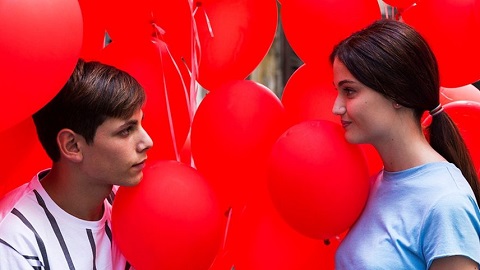
Naples, Italy in the twenty-first century is a hotbed of crime, largely because there is no other choice for the youth of the city to turn to, and even the legitimate jobs available are connected to whatever crime family has the upper hand at any one time. One such youth is Nico (Francesco di Napoli), who like any other fifteen-year-old boy in the country is interested in having fun with his friends and getting off with girls, but he is also a member of his own gang, a gang of kids who are up for grabs when it comes to who controls them. Nico has some short-term nostalgia for the previous crime bosses, for they refused to demand protection money from the shops, but what will this bring him?
Piranhas was yet another crime saga from Italy, and another to be based on a true set of events, this time based on the writings of Roberto Saviano who had gotten into hot water for his exposes of the Italian Mafia, so much so that he had to live the rest of his life in hiding after his first big hit had been published. Therefore, true crime fans would be well-served by his output and the work inspired by it, though after a while you had to ask yourself, who was this for? Was it for the genuinely socially engaged, or was it for the rubberneckers who loved to gawp at the worst kind of behaviour of humanity, and in so doing, effectively glamorise it and raise the criminals up to a level of respect?
There's no doubt material like this could be compelling, and director Claudio Giovannesi did his best to render this as realistically as possible (the source material emphasised the brutality to a more savage degree), but there remained the nagging feeling that he was sentimentalising a strata of society that would have no interest in anyone being sorry for them. The boys' tough façade is presented time and again as a potential house of cards when there where bigger, tougher bad guys around every corner who could bring their ill-thought out plans crashing down around their ears, but the fact was that they were the next in line in the criminal underclass: they were the future.
To its credit, Giovannesi never let us forget this young generation were tomorrow's gang bosses and hitmen and extortionists, as we would be reminded time and again how young they were, again with a sense of regret that their lives, should they continue and not be ended by a stray or not-so-stray bullet, were being wasted when their energy could have been channelled into building a better Italy for the following generations. We had glimpses of Nico's home life, with a single mother who looks barely older than he is, and a brother who we don't need to be told outright is going to carry on in his older sibling's footsteps with the same gusto as Nico did, and there was some forced pathos in him bickering about not getting his jam tarts from his mum and accusing his brother of eating them.
Stuff like that added some dimensions to the youthful crims, but was it really necessary? Maybe if they had highlighted the sheer violence of the world they were growing up in we might have had a stronger picture of a city where you could die over the pettiest of reasons, simply because all the wrong people were carrying guns. As for the police, there was one humorous sequence where they gatecrashed a posh wedding Nico is a waiter at, and to nobody's surprise it turns out this family has money because they are corrupt, hence the cops descending on them to take away the heads of the clan. But mostly we were directed to feel very sorry for how things had turned out, rather than angry, an emotion that might have sparked more change. That we cannot see a way out was not a flaw in the telling, however, as it was clear it would take a concerted effort by everyone in this situation to reform, and reform was not the criminal way. Music by Andrea Moscianese.