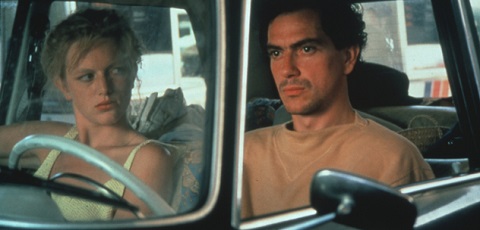
Rex Hofman (Gene Bervoets) was on holiday with his girlfriend Saskia (Johanna ter Steege) to France, where they hoped to spend time cycling in the mountains, taking in the scenery. But along the way, he acted badly towards her when they ran out of fuel for their car in one of the long tunnels, leaving her to panic while he stomped off to the garage down the road. It might have derailed the relationship, she was genuinely upset, but they did make up later, and eventually stopped at the services, Rex having learned his lesson. However, something happened at that location which would change their lives forever, because Saskia would not come back from her trip to the restroom...
The Vanishing was the pinnacle of director George Sluizer's career when it should have been the start of great things. The Dutchman had been making films for a while, but thanks to its killer finale, this effort captured the imaginations of cinemagoers across the world, becoming one of the most famous Dutch films outside of Paul Verhoeven's work. The problem was, Hollywood came knocking and wanted to remake this, which Sluizer agreed to, and promptly sabotaged his prospects with a film so idiotic in comparison to the original that almost everyone lost confidence in him. It wasn't entirely his fault, and he did make later movies, but the bubble had burst on his lasting impression.
Therefore there are two versions of The Vanishing to watch, one for those prepared for the original's bracing bleakness, and the one for stupid people; no prizes for guessing which is more commonly recommended. The thing about the 1989 Dutch effort was that it methodically took you through the process that ordinary folk can bring themselves to perform acts of evil, but it did not dress it up in fancy psychology and Gothic horror passed off as a police procedural, it kept its tale deceptively simple and plain. The villain here was no criminal genius, nor a sadist of any great imagination, if anything it's a small miracle he is able to pull off any scheme at all as time and again he is rumbled.
But it just takes one gullible person to believe what they are telling them for the villain to gain a foothold, and then if they are manipulative enough the world will begin to march to their step. We are shown early on that Raymond Lemorne (Bernard-Pierre Donnadieu) is the bad guy, yet a flashback illustrates his utterly ordinary home life with his wife and two daughters, and an unremarkable job as a lecturer. The only aspect that makes him stand out is his penchant for rather cruel practical jokes, and the true horror arises when we realise that the crime he has committed is merely an extension of that prankster tendency. One of the most chilling scenes sees him unable to carry out his wicked plan on a potential victim thanks to a bout of barely restrained laughter. But he has done something.
For Raymond, his evil is just a joke, and the real, tragic consequences - a missing woman, her boyfriend's life ruined as he obsesses over where it all went wrong and unable to understand what he has done to deserve this - are merely part of the fun. As the film quietly trundles along to that shock ending, you can almost be lulled into a false sense of security that everything will turn out for the best, yet the tone of unease keeps bubbling up from under the surface in every scene, mostly because Raymond likes to self-psychoanalyse as a rationale for his self-described sociopath personality. The Vanishing was so low key, so matter of fact, that first time viewers may wonder what the fuss was about, assuming they had not had the story spoiled for them (easier in the internet age, it had to be said), but the big reveal was so dreadful for the characters that it was likely to prey on the mind for days, even years afterwards. A difficult film to rate: there were more exciting thrillers out there, but rarely has any got under the skin of why the ordinary becomes evil so memorably. Music by Henny Vrienten.
[No extras on Studiocanal's Blu-ray, but it's a nice print.]