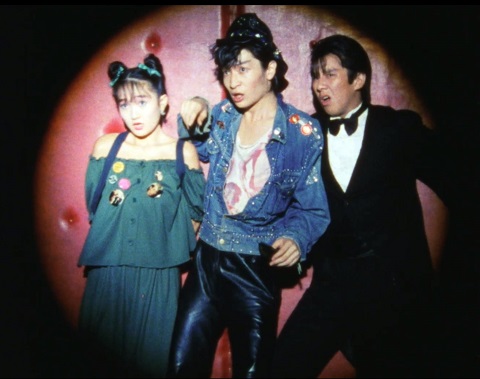
This is an exclusive nightclub restaurant where all the top Japanese clientele attend, but are they ready for The Stardust Brothers, in person, tonight? What do you mean you've never heard of The Stardust Brothers? They were once the biggest pop act in the country, but now are languishing in obscurity; fickle fame is like that. But how about they tell you their story? After performing their opening number to the patrons which leaves them speechless, and not necessarily in a good way, Shingo (Shingo Kubota) and Kan (Kan Takgai), who may or may not be actual brothers, decide that would be best, especially as they are determined to claw their way back to the top. But the story first...
Even if you are Japanese, you might not have heard of this film before its rerelease, with a bunch of festival dates and a home entertainment release supervised by its director Macoto Tezuka that at least placed it in a few more people’s consciousnesses than it had been before its nineteen-eighties debut. Tezuka, son of a more famous anime creator at the time, was fresh from film school when he was awarded this project which like Ken Russell's Tommy or Alan Parker's Pink Floyd The Wall was designed to bring the sounds of an album to the screen in visualised form. He wrestled some kind of narrative out of it, packed in as many songs as he possibly could, and found that nobody was really interested.
But there are such pop culture ephemera that must wait a while until their moment can arrive, and this, originally named Hoshikuzu kyôdai no densetsu in Japan, began to pick up a cult following, particularly when its parent album was rereleased alongside the movie. This was never going to be a blockbuster, it contained too much esoteric appeal for that, but while it was plain to see they could have done with more money thrown at it, for the resources they had this was pretty impressive as it bopped along from setpiece to setpiece rather like a series of pop videos with a linking theme. That theme being, how to get ahead in the music industry, or rather a lighthearted warning about precisely that.
At least, it appeared to be lighthearted, but it was difficult to tell even in its more downbeat scenes exactly how seriously the audience were supposed to take this. At times it came across as a sincere examination of how the business we call show can take young talent, wring them dry, screw them up and throw them away, though in other places it was one dedicated goof, aiming for the funny bone and not the emotions. The Brothers in question were played somewhere close to the style The Monkees approached their cult flop Head, so it was fine to laugh at them only they were telling you something serious about appreciating the genuinely talented over and above the marketing machine that brought them to the fore, only at the same time we were prompted to wonder if they were worth the hype at all.
In a lengthy flashback that took up practically the entire movie, the Stardust Brothers are snapped up from their punk gig by a potentially sinister guru at a major record company, whereupon they are subjected to a whirlwind of a rise to fame and absolute domination. Japan has a production line of hitmakers rolling along much like the West does, and this film was a commentary on that as we do not really anticipate Kan and Shingo enjoying the fruits of their success for long, not when they treat those around them increasingly badly. That includes the girl they take under their wing, Marimo (singer Kyôko Togawa, who sadly killed herself when her own fame deserted her), and she becomes emblematic of their fans: when they start to mistreat her, the levels of tolerance for their fame are called into growing question. The songs were undeniably catchy and would make perfectly fine listening on their own, but married to imagery of a zombie invasion or a teleporting Rolls Royce and you had something very much its own thing, maybe too much to latch onto a real, dedicated following.