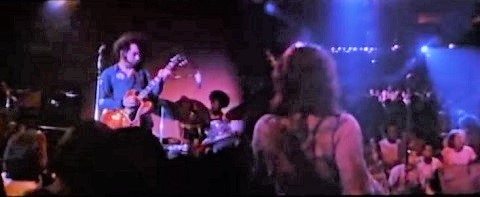
The Fillmore is a music venue in San Francisco that has been home to many of the greatest rock acts of the hippy era, so it seems fitting as that era is drawing to a protracted close that it should be closing this week. The place's owner is Bill Graham, and he has a reputation for being a hardnosed promoter of his business, frequently on the telephone in his office to make deals with the band's management, or even the bands themselves, to get them to play, and that is all the more imperative now as he wants to secure a stellar lineup for his grand finale. And if his "guests" cannot sort out their wishes for billing and lighting and sound and all the rest of it, woe betide them...
This is not often mentioned in the same breath as the other big music documentaries of the late nineteen-sixties to early seventies, though that may be because there were just so darn many of them around this time and it has been lost somewhat, not to mention that while Woodstock defined that period as a hippy dream (no matter the facts of the concert), Gimme Shelter, which detailed the Rolling Stones' disastrous show at Altamont Speedway seemed to put the tin lid on any kind of optimism that this music would change the world. With other major docs involving the likes of Jimi Hendrix and Janis Joplin - both dead by the stage this was released - the prospects looked gloomy.
Especially when rock was turning so corporate, seeking to hold ever larger shows for the biggest acts, leaving you thinking no wonder Graham wanted out of it, as he states here. Not that he was out of it for long, remaining in the business until his death in a helicopter crash in 1991 at the age of sixty-one, meaning he survived longer than, say, his pal Jim Morrison, but not long enough to see the resurgence of interest in classic rock and pop from the sixties and seventies that came to mark the cultural influences of the nineties. Again, this film was difficult to view in that decade, tied up in rights issues: when released on DVD eventually, Boz Scaggs refused permission for his work to be used.
Considering how the movie opens with Graham slagging him off for diva behaviour, you can understand why Scaggs would not be that keen to be included, but he was captured at somewhere near the start of a successful career in the seventies, whereas a lot of the others we heard were more of the survivor type, having undergone changes in their band members since they first hit the big time (or somewhere on nodding acquaintance with it). Not helping was that director Richard T. Heffron had evidently been inspired by Woodstock and shot almost three quarters of this, maybe more, in split screen, which he rather shamelessly aped from the classic music documentary without much reason for it in such an enclosed space as the Fillmore. Even worse, his shot choices frequently undermined the performers.
Therefore It's a Beautiful Day, a real cult band whose legacy grew after lead singer Pattie Santos died in a car crash in the eighties, should really have been given better treatment than Graham mouthing end of an era musings over them, and half the screen taken up with student riots; if it was supposed to be ironic, it was doing a disservice to their song regardless. Then Santana, probably the most celebrated band at that point in time, may be given two songs uninterrupted, but wouldn't the movie audience prefer to see Carlos's fingering and accompanying trademark face-pulling rather than closeups of the organ player's hands instead? The Grateful Dead was one of the other coups, but unexcitingly noodle through Casey Jones and Johnny B. Goode, while Jefferson Airplane were victim to that complementary (distracting) footage syndrome. But if you were a fan of rock impresarios, hearing Bill Graham interrupt proceedings to hold forth on various topics would satisfy you more than the often ho-hum performances; he was a real character, and Heffron exploited that.