By the late nineteen-eighties and into the nineties, the Glastonbury music festival was not in great shape as the post-Thatcher hangover resulted in social unrest, and that often meant there were more police dragging the festivalgoers off to prison than there were good times to be had listening to the artists. It was looking as if Michael Eavis, who founded the celebration, would have to think about calling it a day, as it was attracting the so-called New Age Travellers and their ilk who were considered undesirables by the establishment, and increasingly the dropouts were being scapegoated for all that malaise affecting the British nation. But one man had a vision...
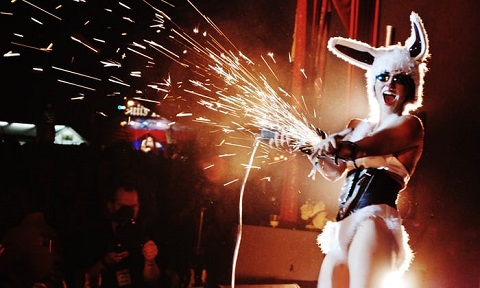
That one man was Roy Gurvitz, who loved the idea of Glastonbury though not necessarily as a music festival, more as an experience that could be facilitated by the travellers who he sought to organise into entertainers and for a number of years, was successful. Director Sofia Ollins spent over a decade following him around the site and recording what would now be termed cabaret, the sort of thing you can see on a night out in many British cities but had their inception as acceptable entertainment here. Gurvtiz called this corner of the occasion Lost Vagueness, and though it transformed into something different, more commercialised, he can be said to have started something.
Do you have a tattoo? If you do, you can thank the hippies who set up the counterculture at festivals like Glastonbury for putting the idea in your head to get one, even if you would run a mile from a show that featured people like that in real life. It was not only body art that was popularised by this movement, as it involved politics, music, comedy and simply dressing up and hanging out: the ballroom dancing at the festival was, we are shown, the reason why this rebellious nature became so influential, all in the name of having fun, but with more serious overtones of self-expression and individuality, not following the herd. The ironic thing was that once these memes caught on, they became the new normal.
That joke in Monty Python's Life of Brian never seemed so relevant: "You are all individuals!" shouts a frustrated Brian, only for the masses to reply in unison, "Yes, we are all individuals!" And so it was here, as holidaying at a festival, getting a tattoo while there, taking in the amusements and buying a T-shirt became the way of expressing yourself for millions, not only in Britain, either. Not that there was anything wrong with that in itself, but when everyone else was doing it, and it was making a lot of money for some already very wealthy corporations, you got this documentary's point that yesterday’s social revolution is today's novelty coffee mug. But what did the man who arguably kicked it all off think? Ollins had interviewed him at various stages in his "career", as well as those who knew him, and painted an intriguing picture.
A lot of this was one step up from edited together home movie footage, but it did depict an absorbing tale of how one boy ran away from home, the mother he loved and the violent father he detested as well as his sister who spent twenty years looking for him, and basically became a self-made man in a way that Thatcher might have grudgingly admired thanks to the success of his enterprises. We can see he had picked up his father's temper, but also his mother's creativity, both of which became a benefit and a drawback when he had very fixed notions of what it was that Lost Vagueness, which expanded from the field show to an actual business model, should have been. Along the way those clips provided laughs and shocks, but the director was wise to keep returning to Gurvitz as the centre, even as he was marginalised from not only his big idea, but his family and friends as well. There was a sense of needing to be in on the joke here if you didn't recognise so much as half those mentioned, but it was a compelling yarn even with that caveat.