Winsome teenager Heather ('80's scream queen Lesleh Donaldson) returns to help Grandma Maude (Kay Hawtrey) convert the family-run funeral home into a guest house for tourists in the summer. Devoted to the memory of her seemingly saintly husband, Maude has her upright moral sensibilities tested by some of the more obnoxious guests including an adulterous couple. Yet according to nice local boy Rick (Dean Garbett), Heather's grandfather was far from the upstanding citizen he is made out to be. Meanwhile Rick's brother, semi-comic relief Deputy Joe Yates (Alf Humphreys) is investigating the disappearance of a real estate developer last seen poking around the funeral home. Already wary of Billy (Stephen E. Miller), a local simpleton lurking suspiciously about the place, Heather is further unnerved late at night when she hears voices conversing in the basement. Everyone assures Heather there is no-one there. Then someone starts murdering guests.
Alfred Hitchcock passed away on the twenty-ninth of April, 1980. Had he lived long enough to see Funeral Home released in theatres later that year there is a good chance he would have sued. One of only two projects credited to screenwriter Ida Nelson, the other being oddball festive cartoon A Cosmic Christmas (1977), this dreary Canadian slasher film brazenly rips off Psycho (1960). Right down to the shock climax wherein the basement reveals a grisly mummified corpse and closing monologue with a supporting character neatly psychoanalyzing the killer. Quite how producer-director William Fruet managed to get away with it, let alone snag a handful of positive reviews, is a much bigger mystery than the identity of the less-than-mysterious murderer. Honestly, if you can't guess who it is based on the absurdly unsubtle clues littered throughout the first thirty minutes alone you should consult your doctor.
Fruet's career got off to an auspicious start when his first feature Wedding in White (1972), a drama based on a play he also wrote, won Best Picture at the Canadian Film Awards. Yet he immediately segued into horror and exploitation films. Most notably rape/revenge horor Death Weekend (1976) though he also gave the world Baker County, U.S.A. (1982), Spasms (1983), voyeuristic erotic thriller Bedroom Eyes (1984), horror-comedy Killer Party (1986) and confusingly-titled giant bug movie Blue Monkey (1987). He later moved into television directing episodes of cult shows like War of the Worlds, Goosebumps and Poltergeist: The Legacy.
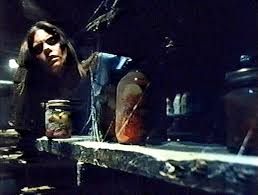
Funeral Home opens promisingly enough. Jerry Fielding adds a touch of class with his mournful score. Cinematographer Mark Irwin, who shot several notable horror films by David Cronenberg and Wes Craven along with the odd comedy by the Farrelly Brothers and, surprisingly Disney's Teen Beach Movie (2013) (!), films the Canadian rural landscape in eerie autumnal colours. Nelson's script crafts a folksy milieu populated with vivid albeit cartoonish characters and even the slight awkwardness inherent in fresh-faced leads Lesleh Donaldson and Dean Garbett invest their roles with a pleasing childlike naivety. Fruet's low-angle camera prowls through the creepy old funeral home in a manner evoking Stanley Kubrick's steadicam trickery in The Shining (1980). Yet the film is all set up whilst delivering precious little in the way of suspense, thrills or even tawdry exploitation. Gore fans will be unsatiated by the bloodless, clumsily-staged murders while the film's misguided attempt at 'sex appeal' is a sub-Benny Hill-like liaison between dumpy, hirsute middle-aged Harry (Harvey Atkin) and his gawky, shrewish and shrill mistress Florie (Peggie Mahon). Gross.
Laden with flashbacks and back-story that sap momentum, Funeral Home meanders interminably through a lot of small town silliness proving virtually a sitcom pilot when it isn't busy trying to mimic one of the most iconic horror films of all time. It even has its own Martin Balsam-substitute in the form of a character played by Barry Morse, veteran of the original television version of The Fugitive and Gerry Anderson's Space: 1999. His role in the story is for the most part frustratingly vague prior to a would-be shock moment that renders the whole subplot moot. Those scary voices that haunt Heather gave rise to the film's alternate title: Cries in the Dark although given the dialogue is barely audible it might as well be Mumbles in the Dark.
Canadian director of low-budget horror and thrillers. Best known for the 1976 revenge shocker Death Weekend, Search and Destroy, Spasms with Oliver Reed and the voyeuristic thriller Bedroom Eyes. Has mostly worked in TV since the mid-80s, on shows like Friday the 13th and Poltergeist: The Legacy.




 Display comments