At the Sullivans' Orphanage, there has been a new arrival. She is Elizabeth, a little girl who has been literally left on the doorstep of the establishment with only a note presumably from her parents, and a bag of her clothing; the note explains she is a mute, and therefore when the two members of staff who run the place ask her questions about where she came from and suchlike, she cannot answer. Nevertheless, they are prepared to take her in without any need for bothersome paperwork, and the other kids are keen to meet her, their interest piqued, but what nobody there realises is that Elizabeth has a connection to a higher power - or a lower one, for she is in fact the spawn of Satan himself!
Good heavens above! And that was more or less the reaction to Suffer Little Children from the tabloid press and the nation's self-appointed moral guardians when they got wind of it, landing it in the so-called "Video Nasties" bracket of movies that Britain in the eighties was obsessed with, off and on, until the advent of the internet which served up all sorts of technological bogeymen to inspire various true-life horror tales, many of them with a lot more credibility than anything those cheapo video tapes would have introduced into the homes of the unwary public. With that in mind, the distance from the panic, it can be entertaining to go back and try to fathom what the fuss was about, and artefacts such as this provide plenty of food for thought.
Whether this was any good or not was another matter, though the words "good" and "entertaining" need not go hand in hand as any cult movie fan will tell you. What this was turned out to be not some mind-warping product of sick individuals, but a product of a suburban Surrey drama teacher who asked her young students (adults as well as children, including her own daughter) if they would like to make a movie on one of those new-fangled video cameras that she had managed to acquire. They did, naturally, and when they guided her towards the kind of material they preferred, they opted to make a horror movie, as kids of that age and era tended towards the morbid, not unconnected to the tabloid press's preference for making the world look like a horrible place to be feared and hated.
Meg Shanks simply wished to promote her school, and got in touch with one time music promoter Alan Briggs who had access to the right filming and editing equipment, so a few improvisation sessions caught on tape later, they had enough footage to assemble into a seventy-five minute piece. They had all had a lot of fun, so the next step was to make them as close to stars as they would ever get, and a distribution deal with a minor video company was organised - that was where the trouble started, as under the new rules they had to secure a certificate for releasing it, and once the gutter press got wind of a gory horror featuring children being promoted, they fell upon the modest production like a pack of hyenas. The results were a mess of accusations and legal threats, and poor Meg saw her dreams of building up her stage school shattered thanks to the misrepresentation.
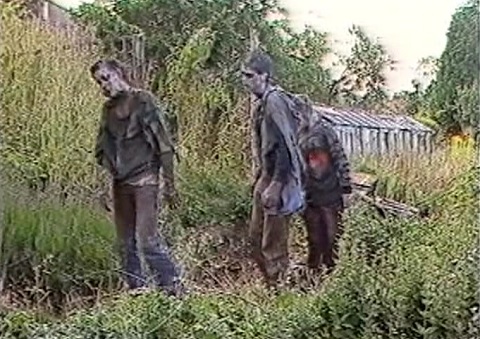
You really have to know the backstory to appreciate Suffer Little Children, because without it, the film is painfully amateurish, full of overacting (and giggling), background music drowning out the dialogue, and a narrative that looks thrown together with little regard for logic since that's precisely what it was. As a record of a bunch of kids messing about, you imagine it would have most meaning or entertainment value to those involved before the camera, like a school play for instance, though it does resemble a pirate television broadcast in places. As Elizabeth causes "accidents" to happen to her fellow orphans, the tension mounts (sort of) as we are drawn to the grand finale which saw a lot of stage blood flung about, the adults "killed" - including the pop star character, a lot of repetitive music on the soundtrack hammering the points home, and a special appearance by Jesus H. Christ Himself who puts paid to the little monster's machinations. Except now she's a grown woman. Worth catching for the world's first zombie picnic, and to understand the joke that is moral panics whipped up to sell newspapers. Except it's not a very funny joke.
[Severin's DVD looks and sounds about as good as a video recording from the mid-eighties could, so don't expect HD quality. The extras are a trailer, an interview with Briggs who goes into the background, and an interview with Video Nasties expert John Martin who explains the manufactured outrage in the media.]




 Display comments