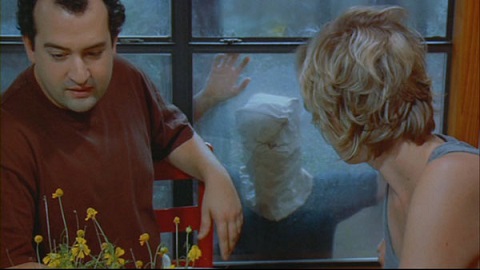
Four friends, Chad (Steve Zissis), Matt (Ross Partridge), Michelle (Greta Gerwig) and Catherine (Elise Muller) are all in the acting business, but find the work hard to come by and progress almost impossible. Tonight they attend a screening of a no-budget indie flick and to be honest, none of them are too impressed, though the fact remains this director (Jett Garner) has made a movie and they have not, therefore technically he is doing better than they are even with his banal ideas of what is stirring and entertaining. After getting into the aftershow party (apart from Matt), they convene in a diner and decide nobody is going to make their movie for them - they will have to do it themselves.
Baghead was a contribution to the so-called mumblecore scene of the two-thousands from two of the kings of the form, The Duplass Brothers. They were considered the best of the bunch, not that it ever had a huge following, but they made a few waves with their incessantly conversational work just as their peers were doing. The major breakout star from these efforts was Gerwig, who quickly found herself much in demand, though all four main actors here enjoyed consistent, if not as high profile, careers in the industry, but you imagine if there was a reason for future generations to go back and watch this it would be to see a twenty-three-year-old Greta in her nascent screen existence.
Although the other three were capable enough, it was clear she possessed more star quality even if she was required to play it kooky in a particularly indie chick cliché sensibility, or possibly because of that since she was essaying a stereotype from about a million other independent works, some more prominent than others and in what had become an easy method to win the hearts of the fans of this sort of cinema. If you did not feel patronised by a character type who had grown to be an irritant to many who felt they were above this strain of persona, then there was much to appreciate in Gerwig's performance, she was funny at least in a style that suggested in that improvised dialogue she could be going places.
Yet here was the curious element: Baghead was a horror movie. Only it was a horror movie in the way that eighties chiller April Fool's Day was, and that was going to lead to controversy from the purists who wanted genuine peril in a genre that was pure fiction, a strange dichotomy in itself. The big twist was easy to guess as it seemed the Duplasses lacked a killer instinct, other than skewering their fellow filmmakers with that opening ten minutes (and more) which may have you bringing to mind the old saying about people who lived in glass houses not throwing stones. However, that came across as the message their characters were designed to impart as well, suggesting the experience of watching this was a lot more meta than you might have suspected from the very beginning.
There was a certain cheek to positing this quartet as struggling movie makers out in a cabin in the woods working out a slasher movie plot, which the Duplasses do not appear to have any interest in, and then the rest of the narrative unfolding like an actual slasher movie with the murders taken out. You know those scenes where the audience was forced to get to know the potential victims when mostly what they were thinking was, "when does the carnage begin?" Imagine around an hour and a quarter of those with the intermittent glimpse of a man with a bag on his head to increase the frankly lax sense that the foursome was in peril, and you would be up to speed on what was on offer with Baghead. In that way, presumably unintentionally, this looked more faithful to the regional slashers of the eighties that were dreamt up to cash-in on that craze, which was interesting as far as that went. The postmodernism certainly placed the directors in a difficult position, but they shrugged off any accusations of arrogance and continued on their merry way to further success, blithely leaving this oddity behind them. Music by J. Scott Howard.