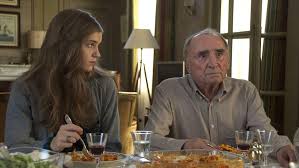
Constance Pipponier (Noémie Schmidt), a struggling college student, thinks her desperate search for an apartment in Paris is finally at an end when she rents a room from curmudgeonly old Henri Voizot (Claude Brasseur). Already burdened with studying for exams and pressure from her parents, she tries to abide by Henri's absurdly fastidious house rules but somehow lands on his wrong side. To avoid being thrown out on the street, Constance rashly agrees to assist Henri in a spiteful scheme to lure his forty-something son Paul (Guillaume de Tonquédec) away from his shrill, overbearing wife Valérie (Frédérique Bel). Needless to say, as things grow increasingly complicated Constance comes to regret that decision.
Adapted from a hit stage comedy by Ivan Calbérac, who won a César award for his screen debut Iréne (2002), L'Étudiante et Monsieur Henri (The Student and Mister Henri) drew flak from critics who compared it unfavourably with Claude Sautet's much-beloved Nelly and Monsieur Arnaud (1995), another French character study pairing a grumpy old man with a lovely young woman. It is certainly not in that league but critics unfairly lumped this together with films like The Players (2012), Amour & Turbulences (2013) Family for Rent (2015), Blind Date (2015) and Up for Love (2016) as further proof of the decline of French comedy into cod-Hollywood froth. That is simply not the case with Calbérac's film at all. Grounded in nuanced characters and painfully relatable human foibles, it has depth and melancholy. The chemistry between skilled veteran Claude Brasseur and newcomer Noémie Schmidt, a beguiling ingenue of the sort only the French film industry seems able to consistently reproduce year after year, is natural and engaging enough to gloss over the odd awkward moment in the transfer from stage to screen.
Much like the popular Gérard Depardieu vehicle from yesteryear: Mon Père Ce Héros (1991), The Student and Mister Henri turns a potentially offensive premise into the stuff of light, surprisingly warm and humane farce. Even so the spine of Calbérac's story remains the slow thaw in the relationship between two flawed, sympathetic characters who grow to learn something from each other. He is grumpy and embittered. She is feisty and forthright and does not take any guff from the old so-and-so. It is an old, familiar tale but plays out with more pathos and naturalism than that description might suggest. Also to the film's credit the subplot dealing with Constance and her struggle to find her place in the world does not sugar-coat the adversity and tough decisions young people face in order to grow. Her setbacks at college, frustration with a family seemingly indifferent to her gifts and aspirations along with a propensity for foolish flings with exploitative middle-aged substitute father figures, all ring painfully true.
Typically for a French comedy the film somehow gets away with glossing over more troublesome aspects like the age-difference between Constance and Paul along with faintly icky undertones of sexual exploitation. In fact Paul is portrayed as a caring, sweet-natured, self-deprecating soul, nothing at all like his sour old man albeit a trifle buttoned-down. Most of the laughs stem from Paul's flustered reaction to this unexpected attention from an attractive young woman and later his cringe-worthy attempt to party with kids half his age. However, Calbérac wisely takes pains to establish a solid motive for Constance to play along with Henri's reprehensible plan and still remain sympathetic. Grace moments of humanity elevate the material: e.g. Henri's wistful reaction when Constance reveals her talent for playing the piano. This turn of events sparks a streak of altruism in the old grump, though while the experience spurs Constance to stand up to her dad, the film fumbles the lesson Henri needed to learn about respecting the life choices of young people.