| |
Hex
|
|
| Year: |
1980
|
|
Director: |
Kuei Chih-Hung
|
| Stars: |
Tien Ni, Wang Yung, Chen Szu-Chia, Chang Hsi, Chien Szu-Ying, Liang Shang Yun, Shen Lao, Tan Ying, Tu Yung Liang, Yue Tau Wan, Chan Lap Ban, Chan Yung, Cheung Chok Chow, Chin Tien-Chu, Fang Yu, Fung Ming, Hon Kwok Choi, Lau Yat Fan
|
| Genre: |
Horror |
| Rating: |
  6 (from 1 vote) 6 (from 1 vote) |
| Review: |
If you are wondering why this mansion is abandoned and nobody goes near it, hasn't done for decades, then there is an explanation for that, it is all to do with the events that occurred to the lady of the house, Sau Ying Chan (Tien Ni). She hailed from a wealthy family, and married a poorer man with whom the times were good, until that was he started drinking to excess and squandered her fortune, leaving her little but the house and a precious jade bracelet her mother had given to her. To make matters worse, she fell ill with consumption and had to be consigned to bed, and though her maid did her best, she could do nothing to stop her husband Yu Yeung Chun (Wang Yung) from abusing her. This could not continue...
So what better solution than murder? Hex, or Xie as it was originally known, was one of the first horror movies out of Hong Kong of the nineteen-eighties, a decade that saw the genre in that region grow ever more extreme to satisfy some increasingly jaded tastes. This began resembling a domestic drama with wife beating as the theme, the evil Chun treating his wife with awful callousness, and there is no way she can stand up to him, being so weak, so when another character arrives it appears there is a chance for change. She is Wah Leung Kei (Chen Szu-Chia), and introduces herself as a friend of Mrs Chan's family who when she witnesses the dreadful behaviour of her husband wants to help.
Thus Wah moves into the mansion and tends to Chan, but the trouble with that is Chun is infuriated by these circumstances and grows ever more violent, especially when Wah stands up to him. This leads to the first plot point that indicates we are not watching some basic melodrama, as returning home from a drunken night out Chun attacks both women but finds himself on the receiving end when they turn the tables: drastically, as he ends up drowned in a large earthenware jar of water. The ladies promptly tip out the corpse, wrap it in a blanket, and dump it in a nearby pond, which should be setting off alarm bells for those who have seen a certain French horror-thriller for Hex was following the narrative of Les Diaboliques almost to the letter.
That French classic had been incredibly influential in its field, and was still, on this evidence, affecting genre flicks across the world into the eighties, though not all of them were so slavish in their, er, tributes to that source. However, that was only accurate to observe up to a point, for after spending half an hour, maybe more, of tracing the Henri-Georges Clouzot original in a manner that renders its own mystery all too predictable, this managed to spiral off into its particular madness which made the rest of this, what had gone before, worth sitting through. The other big influence on this, as became apparent, was the then-fairly recent Hollywood horror blockbuster The Exorcist, though director and co-writer Kuei Chih-Hung preferred to borrow his cinematic language from closer to home.
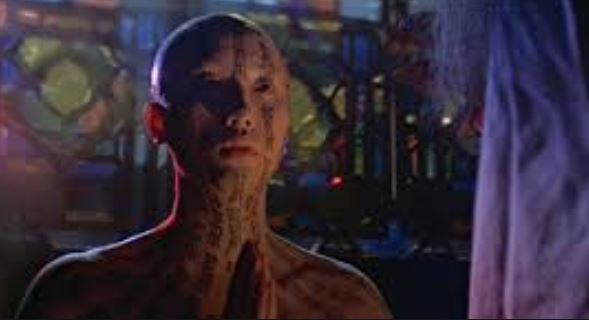
Asian cinema, essentially, and there was a lift as blatant as all that Les Diaboliques business for its final twist from a certain, internationally popular Japanese chiller of the sixties, though grafted on here it did arrive from out of the blue. Talking of blue, the actual exorcism took the form of a buxom naked lady throwing shapes around a room of the mansion while an old wise woman performed various rituals on her, not something you get much of in those Exorcist rip-offs, before or since, but it was certainly a talking point and wise to place that at the end where the audience would emerge with the scene fresh in their mind and ready to mention it to any other potential punters they may have met afterwards. But before all that, there was a sequence or three of what can best be described as a Hong Kong runaround, as various characters tried to escape meeting a sticky end, and not always succeeding, which had an energy all its own if not exactly a whole lot of sense or good taste. You don't watch these for that anyway. Music by Eddie Wang.
|
| Reviewer: |
Graeme Clark
|
| |
|
|


