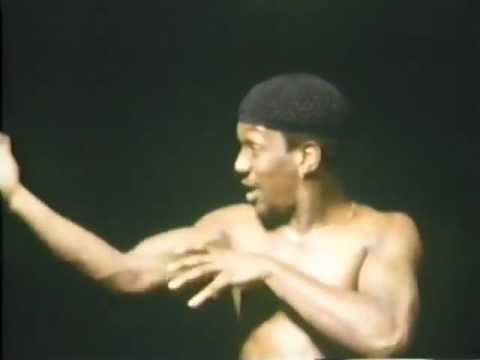
Nathan (Nathan Ingram) has just seen a Bruce Lee movie and he is walking through the streets of New York City telling his friend all about how cool it was. Then they are approached by another pal who seems interested in what he is saying until a group of his fellow gang members appear and surround Nathan, then attack. They hold him up against a chain link fence and beat him up because their leader, Handsome Harry, believes he has been making moves on his now pregnant girlfriend, which Nathan has not, though he has known her since childhood and considered her a good friend - now he has been attacked because of this he is having second thoughts. What else can he do but plan his vengeance?
The Deadly Art of Survival is a great title, because if you think about it, it's a conundrum: surviving is to do with living, but if it's a "deadly art" then it’s really to do with dying, paradoxically, do you see? They were really thinking about it, though the act of watching the film may lead you to believe that name was a little lost on such a work since it was plainly a home movie that somehow escaped onto the big screen, albeit not many big screens though it did play in Times Square. The men behind it were not wholly delighted with it either, truth be told, as what they had pictured in their heads was not exactly what was ending up on film, but somehow a cult grew up around their efforts.
Not a huge cult, it was accurate to point out, but if you were looking for the missing link between Hong Kong martial arts flicks and the way hip hop culture embraced them from the eighties onwards, then you could do a lot worse than check this out, even if it was simply through curiosity. Ingram was a major follower of those Asian movies, as were plenty of his contemporaries, though he went out and did something about it by starting his own school to teach kids the benefits of the discipline rather than turning to drugs and crime and utterly losing your self-respect. He was a bit of a local hero whose improving philosophy could be detected in the film he made with director Charlie Ahearn.
Ahearn was an important figure in hip hop himself, a budding filmmaker who Ingram approached to see about a project they could join forces on in the late nineteen-seventies, which they would improvise over the course of a few weekends with friends and members of Ingram's martial arts circle playing the roles and assisting behind the scenes. It’s the way Sam Raimi got started, the way Peter Jackson got started, the way Edgar Wright got started, but Ahearn was there at the start of the amateur turning professional wave that took off in the eighties, and it was his next film Wild Style that was really a statement of intent for hip hop, an item that would never have been made had it not been for his endeavours here, which proved he could shoot and assemble a production with a budget of peanuts.
Therefore its place in history was assured, but what was it like to watch? As with many a tiny budget film, shot on 8mm in this case, the ambition was certainly there but the resources were lacking, meaning every fresh notion that struck them as a neat inclusion was rendering what plot they had incoherent, as if each weekend had them trying out something new regardless of what they had been planning the previous weekend. There was a disco soundtrack which placed it precisely in 1979, though you imagine the rights holders to those tunes were not consulted for permission, and Ahearn would break off from the action to simply capture scenes of people chatting, be that on the merits of Bootsy Collins or the more serious topic of rejecting crime even when circumstances were tough. There were laughs, though, especially when Nathan has his baby (and more!) kidnapped by ninjas who challenge him to a rooftop duel, parts that were worrying as the pregnant girl is beaten, and an accomplished finale as Nathan gives Harry what for. In its way, as a home movie it was as telling as any newsreel.