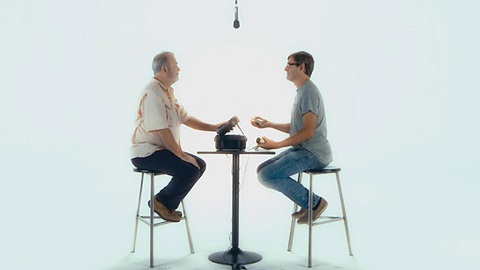
Louis Theroux is a British documentary maker and presenter who thought the Church of Scientology would make a good subject for his latest work, his first film to be released in cinemas. However, though he wished to present a balanced view of the organisation, this proved next to impossible since the Scientologists refused to speak to him, and with their well-known secrecy they were unlikely to allow him access to the inner lives of anyone connected to them, certainly not their leader David Miscavige who had not given an interview in public since the nineteen-nineties. So Theroux had to rely on what everyone who investigates the Scientologists did: those who had left it, and were not shy about criticising it.
Note the title here: My Scientology Movie, not Scientology: The Evil Cult, or Scientology: Mad Bastards Incorporated or some other disparaging name they could theoretically have served up. The reason for that seemed to be twofold: it presented this as impartial, and also because if they had branded it with the insults that the rest of the world outside the cult believed were appropriate, their lawyers would have been down on them like a ton of bricks. Therefore all the quirks of a Scientology investigation were there, such as the constant cropping up of legal disclaimers in the form of denials from the subjects so as to cover the arses of the filmmakers after yet another nugget of information strongly suggesting they were a criminal organisation.
If you simply knew Scientology as what Tom Cruise followed, then you were probably Theroux's target audience, as almost everyone who was aware of the shenanigans they got up to was going to point you in the direction of the highest profile exposé, Going Clear, both the book by Lawrence Wright and the subsequent documentary film by Alex Gibney. It was just Theroux and his director John Dower's bad luck that the latter was released contemporaneously with their efforts, as it was so rigorous in its investigation that it would appear to be the last word, so where did that leave them? Getting on the nerves of Scientologist drones trying to suck up to Miscavige, mostly (in methods honed by Theroux's old boss Michael Moore) but also more interestingly the whistleblower Marty Rathbun.
He had become a familiar figure among the ex-members, since he had been one of the highest-ranking officers in Scientology to make a break with it, and remained controversial for his revealing tales of his behaviour as Miscavige's right hand man. The organisation went on to deny he had ever reached such a position, in spite of documents shown here to the contrary, but he had been such a bully boy to keep members in line that you began to understand their frequent positing themselves in the victim role, as it became obvious most were victims of the organisation itself. Where did that leave the Great White Whale who Captain Theroux desperately wanted to turn the cameras on, Miscavige? By these tellings, a deeply paranoid and arbitrarily violent man whose power had warped his mind decades ago. He had been given the leadership of Scientology after its no less maverick creator L. Ron Hubbard died, and it had, by these accounts, not improved under his tutelage - the phrase "Reign of Terror" often cropped up.
It would have been great to see Theroux adopt his innocent abroad persona and try to get to the heart of this divisive figure who thousands of Scientologists lived to please, to the apparent detriment of their own freedom, never mind sanity, but it was not to be, so what we got instead were the obsessive recorders who showed up once the doc was underway, recreating various secret events in lieu of having actual footage. These passive aggressive - and often, just aggressive - troops were by now a staple of Scientology's presence in documentaries and even clips online, doing themselves no favours and perversely naïve if they believed it would put the public off wanting to see them revealed as, well, as nutcases basically. But Theroux's relationship with Rathbun was intriguing as the ex-insider had obviously gotten up to some pretty rancid activities he was unwilling to open up completely about; that's his business, of course, though you had the impression Theroux was itching to dig into this past. The results felt like half a story, yet that half was disturbing enough to carry it, almost a fluke as if the Scientologists had simply ignored it this would not have had the credence it did. Maybe Louis should have secured an interview with Xenu?