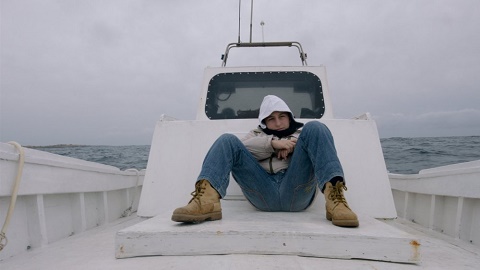
Lampedusa is a tiny island in the Mediterranean, located off the coast of Italy and Sicily, which after so many centuries of nobody paying much attention to it was abruptly landed in the headlines as a place where the refugees from the Middle East and Africa were arriving on boats, thousands of them, and many other thousands were dying in the journey which gave a major headache to the authorities as the Italian Navy did their best to cope with a seemingly never-ending stream of displaced people. But how do the six thousand-strong population of the island cope with these newcomers? How has this crisis affected them?
According to this, unless you're a doctor or in the Navy, not much at all, which was a curious conclusion to draw in director Gianfranco Rosi's record of the hot topic of its day (and proud winner of The Golden Bear in Berlin of its year), the influx of desperate immigrants into Europe who were seeking what they believed to be a better life, but which probably didn't even exist. It certainly did not exist for those thousands who were dying in the process of making their way to the continent, and the many more who were left injured or otherwise incapacitated by dreadful conditions, but still they continued to arrive, as if nobody had told them the sheer hell they were letting themselves in for.
Perhaps showing them this film would be a useful lesson, for it did capture footage of the direst states that people could find themselves in, in many cases far worse than what they were leaving behind, though the precise reasons for this migration were not something Rosi was prepared to cover, and that was a problem. Without offering us the entire picture, or as much as was necessary to build some kind of informed opinion, we felt we were being given these harrowing images with the barest minimum of context as the director eschewed the interviews that would have given us more of a sense of the scale and whys and wherefores of what exactly was going on.
After all, if his film was telling us less than we could find out on the nightly news, then you had to wonder about the ultimate purpose other than to deliver disturbing visuals of real life tragedy. Compounding that problem was that Fire at Sea was actually two films edited together, one about the migrants and the other about a small boy, Samuele, who lives on the island with his family. You may have expected to hear from him about what he thought of the important place his home now has in the ongoing mess, but as far as we could tell he was utterly oblivious to any of it, we never hear him mention it and the closest we get to seeing any reaction at all was when a relative listened to a news report and muttered her sympathies. In the meantime the kid plays violent games and get his eyes tested.
Was Rosi indicating that Europe as a whole were concerned at a certain remove from the situation, but otherwise didn't feel as if it was affecting them? Was this simply a story on the news for them to tut at and move on to something else? Or did he find there was less relevant to the crisis among the locals than he had anticipated, because the scenes of Samuele arseing about with a catapult or struggling at school were less than illuminating. The best person he found was the doctor, who had to witness first-hand the terrible toll this journey was taking on the participants, and he was in fact given the sole interview in the whole film, where the story came alive because we were getting genuine information from someone who knew what he was talking about, and his compassion was a lot more impressive than the little kid shooting cacti or getting seasick. We didn't hear from the refugees either, just shots of mostly a lot of young men playing football, praying, being examined and entertaining themselves at the camp they were gathered at. Late on we saw a few women crying, but again the point was lost on you if you wanted, if not concrete solutions then at least some kind of hope that there was a resolution possible. This just said too little on a subject where a lot needed to be told.