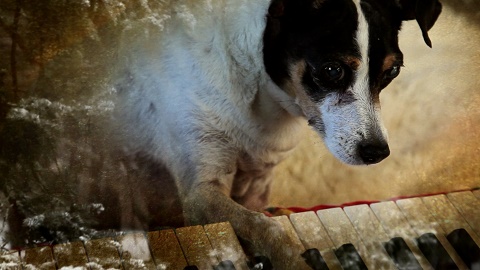
Laurie Anderson, artist, performer and songwriter, once had a dream about being in hospital. She had just given birth and the doctor was walking over to her bed to hand over a small pink bundle, but it wasn't a baby, it was her pet dog Lolabelle. Nobody said anything about this unusual turn of events, they treated the occasion as if it was perfectly normal, but Laurie was well aware that something strange had happened because it was she who instigated the birth. She had not been impregnated by a dog, of course, that's impossible, but she had arranged for an operation where Lolabelle had been sewn into her womb and she had produced her as if she had been a human baby, which wasn't easy seeing as how the dog was fully grown...
The point is not that Anderson is a complete weirdo who should keep these dreams to herself, it was more that she really loved her dog, in fact she loved her so much she placed her in her stories, no matter how outlandish or mundane they could be. There were both types of tale here in what was as much a tribute to the people and pets she had loved and lost in her life as it was an examination of the purpose of storytelling, where no matter how you boil it down whatever yarn you are spinning will always be about yourself, even if it's about a different person, it's concerned with how you see the world.
Anderson, making her first film since the concert movie Home of the Brave, had not grown out of her experimental stage and Heart of a Dog was richer for it as she might have sounded as if she were haring off on various tangents, but the point was always underneath the monologue like an undercurrent, so this may have been devoted to her dog, at least ostensibly, yet her themes were hinting in some places, insisting in others, as she mused open the big questions that had become more pressing in her life ever since that Year Zero for New Yorkers, the attack on the World Trade Center. She acknowledged this in a startling manner that related to Lolabelle's realisation of how death can come from above.
Death was now playing on Anderson's mind, and if you knew anything about her you must have been aware that while making this poetic documentary/stream of consciousness she was mourning not simply her pet pooch but her husband as well. Yet she held back from mentioning the late Lou Reed until the very end when we hear one of his songs and finally, in the last shot, see him playing with Lolabelle, and then we twig that all this worrying over death and how to cope with it was very much connected to what she regretted and appreciated about her time with him, what she wished she could have said and what she was content that she did manage to share. This applied to others she had lost in her life as well.
So her mother, who she doesn't sound as if she was particularly close to or maybe they simply did not see eye to eye, is mentioned here as well, in anecdotal form that assisted in fleshing out Anderson's fumbling towards her conclusion, which was the one about the use of storytelling, as after all, what is a life but a story with a beginning, middle and end? Lolabelle had that, and there were humorous passages here as for example her owner taught her to play piano (really) to alleviate the animal's fears when she went blind, shown in footage shot on a phone. Being a multimedia artiste, Anderson utilised as many different elements of technology to relate her narratives about how data is collected on the most ordinary of people, both by themselves, but also into the higher echelons of the authorities who spied on us to make sure we weren't getting up to anything illegal, yet maybe because they love a story too. There was plenty to mull over, some of it sobering and some of it delightful, and if your attention could wander at the director's soothing tones, there was something here for most of those interested in her wisdom and eccentricity.