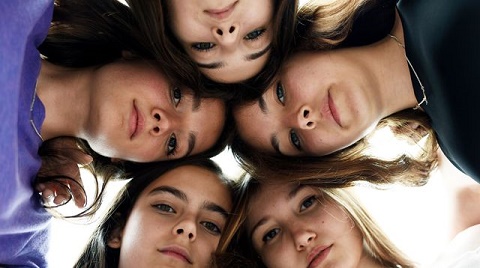
There were five orphaned sisters in Turkey, on the coast of the Black Sea, who would attend school like many girls their age and socialise with the boys, but that proved to be an issue for some in their village. Therefore when one hot, sunny day they chose to head off to the beach with some boys they knew and frolicked in the water, playing a game where they sat on their shoulders and tried to push the other girls off for fun, on the way home they found the atmosphere around them had changed. They thought initially it was because they had taken a few apples from an orchard without asking, but on returning to their house their grandmother informed them they had brought shame upon themselves and their family because they had been seen at the beach, and nobody liked what they saw...
Mustang was born from a chance meeting between two directors at the Cannes Film Festival, at an event where they were the only female directors there. Deniz Gamze Ergüven and Anna Winocour decided they could be very good for each other's careers, and Winocour agreed to assist in penning Ergüven's next project, based on her experiences growing up and taking the patriarchal society in general to task, not just in Turkey but across the world wherever there was injustice to women and girls meted out thanks to traditions and conservative values that denied their place as individuals in their own right. You may be able to draw parallels between these filmmakers and the conspicuously male-dominated world of directing.
Certainly there was plenty of anger underneath what was on the surface a consciously positive depiction of girls unbowed by the constraints expected of them, though as the story went on there was a growing frustration evident with just how bad things could get for the sisters. We saw this ostensibly through the eyes of the youngest, Lale (Günes Sensoy), who is getting to grips with what she can possibly do when she sees her siblings being brought low by those aforementioned traditions which used arranged marriages to keep them in check. After they have supposedly been shamed publically for playing with the boys, their family move them in with their uncle and aunt who provide even more restrictions for them to buckle under.
Yet while there are members of the family who find themselves straitjacketed by what is expected of them, basically be obedient to the menfolk and never think of acting independently, Lale witnesses all this happening and resolves to be different. What started out with some genuine laughs turns dramatic as tragedy strikes, and finally the plot could have easily passed muster as a thriller as she endeavours to escape against seemingly insurmountable odds; it was a highly skilled adaptation to the various reactions to the issues the director brought up, smoothly realised but not necessarily easy to ignore when she made it so clear what the problems were with what amounted to child abuse, unless you think it's acceptable for young teens to be married off the minute they began to express themselves.
Some in Turkey pointed out that the accents were not too convincing for rural locations such as those shown here, though that would not have been such an impediment to enjoyment outside the country who had little or no experience of this, though did raise the question of whether Ergüven was making this film for her fellow Turks or whether she was appealing to the foreigners in the potential audience. It was a credit to her abilities then that she tapped into a universality of subject matter, bringing the matters she was concerned with to the world in a way that delineated the culture that was at fault, where teen girls have anal sex because they believe it preserves their much-prized virginity, and then have to suffer the ordeal of medical virginity tests anyway to prove themselves worthy on their wedding nights. For all the luminous photography, Warren Ellis's moody music and the celebration of feminine sexuality in the face of male exploitation, there was a desperation here that made Mustang more vital than the similar The Virgin Suicides, and that rendered the final scene very moving.
[Curzon's DVD has an interview with the director as an extra.]




 9 (from 2 votes)
 Display comments