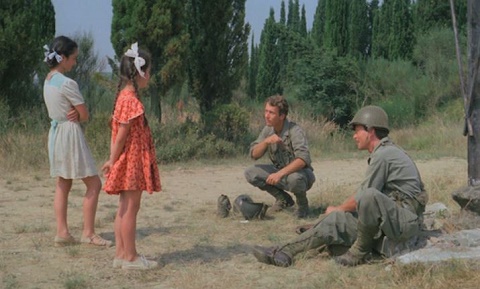
It is the night of San Lorenzo, when if you wish on a shooting star then it will be granted, and Cecilia is telling a bedtime story to her little baby. It is a tale of her childhood as best she can remember it, when she was six years old and the Second World War was drawing to a close, but there was no room for celebration for her village was under threat from the Nazis as the Americans approached. The populace had been reduced to staying in a huge cellar for protection, after being driven out of their homes by the Nazis who had set mines in them, leaving them too dangerous to live in, but there was a rumour going around that the mines would be set off anyway to prevent the Americans getting there. Could the cathedral offer a refuge, as the enemy forces claim?
Brothers Paolo Taviani and Vittorio Taviani looked back to their childhoods for this reminiscence about the war years in their country of Italy as they recalled them, which resulted in a curious mix of nostalgia and dread, nostalgia seemingly because they were only young at the time and therefore could regard the terrible events going on around them as a sort of adventure as the younger Cecilia does, and dread because as we see at the end, the memories are so vivid they felt they had to protect the latest generation for ever having to live through such ordeals themselves. This was made in the early nineteen-eighties, when the concerns about a new world war were very present in the planet's minds.
Italian cinema in the eighties often appeared to be preoccupied with the end of the world, or at least its genre cinema was, so it was interesting and informative to see it affect the art film market as The Night of the Shooting Stars was an example. This crafted a genuine tension between the beauty of the countryside that the refugees from the village travel through, a Tuscan environment that would become very popular with tourists, and the dreadful consequences of a nation not only battling outside forces of evil, but the same thing from within its own community as there remained a strong fascist contingent who were on the same side as the Nazis - the sequence where the victimised villagers meet them was one of the most powerful in the story.
This sense that nature was continuing onward even as bombs dropped and bullets flew was part and parcel of the imagery, and that influenced the journey of the villagers as well, after all they have to eat and survive in what may be picturesque but still involves rough terrain and blazing sunshine that can dehydrate them apparently in mere minutes. But was Mother Nature strong enough to stand up to the fascist threat, which will do nothing but destroy what it cannot dominate? That was another element to the tone, which could relate the Tavianis' worries at a pace too slow for many audiences if the visuals were not striking enough for them: much of the plot involved the thirty or so escapees, of all ages, trudging through the gold and green landscape beneath an azure sky, sort of the deceptive holiday destination from Hell.
Although we are given to believe we will be watching this yarn through the eyes of a child, in fact young Cecilia was only dropped into the film intermittently when we were offered a different perspective on the conflict when the adults' point of view threatened to become too conventional. Nevertheless, her contributions were crucial, as when she accidentally falls into a basket of now-precious eggs, breaking the only potential meal the refugees have, or in a surreal scene imagining a ghastly battle where Italians have turned on Italians is actually a battalion of Greek soldiers at the Trojan War throwing a dozen spears into the man who was about to kill her; she has a rhyme she speaks to fend off evil that actually works, or it does in her mind. Yet we were privy to the thoughts and experiences of the grown up characters as well, with Omero Antonutti as the grandfatherly figure at the head of the village who finds these awful circumstances may have allowed him to discover the love of his life, many years too late. Not your conventional war movie, then, and you probably needed to be prepared for its idiosyncrasies to get to grips with it. Music by Nicola Piovani.