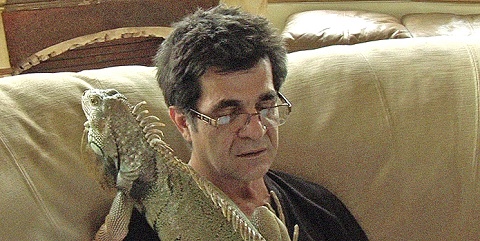
Jafar Panahi is an Iranian film director whose career should effectively be over since he has been banned from making movies by the strict government there, who oversee every production and regarded his output as subversive and dangerous. Therefore when we catch up with him in this documentary, he is under house arrest in his Tehran apartment, having been unable to leave his home for the past few months, and killing time by wondering how he can get around the restrictions on his freedom, both professional and artistic. To that end as he faces a ban of twenty years from his art, he devises a film that is not a film to get his message out to the wider world...
A curious work, This Is Not a Film appeared deceptively mundane, seemingly created to help Panahi kill a bit of time one day as he contemplated a potential six years in prison and even longer as a man whose livelihood had been taken away from him by the totalitarian authorities. Initially we watch him eat his breakfast, take a few calls on his phone, feed his pet lizard Igi and so forth, but as he does we begin to appreciate the crushing boredom of a man who previously had taken the bull by the horns and indulged his creative leanings to international acclaim, yet now is reduced to dully going through approved websites on his laptop or watching his old films on DVD; he may have a plush apartment, but it's been turned into a prison of sorts.
Of course, the mere act of recording this existence was a subversive act, as he was banned from making films of any kind, and that included home movies which he would then edit into a feature and send out into the world, in this case on a memory stick concealed in a cake so as to get past the powers that be in Iran which had also stopped him leaving the country. This eventually played at the Cannes Film Festival which as a representative of the global movie community were enormously sympathetic to Panahi's plight: it's bad enough not being able to get your work made because you cannot find the funding, but to be actively prevented when you could have been letting go with your muse to fashion all kinds of stories that would otherwise be crafted was a personal tragedy.
Panahi, who did manage to make films after this one in secret, gets around this by detailing the plans he had for another feature, that one about a young woman from a conservative religious background who has a chance to go to university to study art, only her family have trapped her in their home until the deadline to accept the place has passed, so she has to work out a way of escaping and securing her enlightenment. As he acts it out and reads from the script, it's difficult not to divine parallels in his lead character's dilemma and the director's, and this eventually hits home to Panahi when he breaks off from his scene to sit in despair, ask what the point of describing films is when you could just make them instead, and leaves the room, obviously upset.
Your heart goes out to him, which may have been the point as he fishes for sympathy from the audience who may not even get to see this, but watching it This Is a Film doesn't feel cynical and manipulative, it's more sincere and quietly desperate as Panahi calls his lawyer and things don’t sound too good for him legally, but with moments of humour to humanise a very humane director indeed. Most of the documentary depicted him alone, with his occasional cameraman largely offscreen (understandably) so that if anyone was his co-star it was the impressive reptile Igi who is also "trapped" in the apartment. In the latter stages, the director was seen chatting with a student in the block who had a part time job emptying the bins, and with some cheek Panahi follows this chap outside into the night where the firework celebrations were popping on the soundtrack, though frustratingly we never get to hear the end of the student's story about his accommodation being visited by the cops. Still, unexpectedly compelling for the pressure it doesn't show outright but is always present.