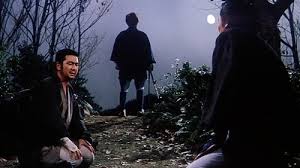
Seeking atonement for killing a man in battle, blind masseur and quick-draw swordsman Zatoichi (Shintarô Katsu) visits his grave near the farming village of Itakura. He finds them in the midst of a celebration. After years of famine, the farmers have finally raised one-thousand ryo to pay off their taxes. Their joy is sadly short-lived. As a procession makes its way to governor Gundayu's palace, bandits kill the guards and steal the gold. Representing the village, three farmers plead for more time but are imprisoned and brutally tortured by the unsympathetic governor. Spotted at the scene of the crime, poor Ichi becomes prime suspect. However, the outraged farmers come to suspect the mastermind behind the theft is Boss Chuji (veteran stage actor Shogo Shimada in a powerful performance). Yet this Robin Hood-style bandit always protected the village in the past. Ichi is acquainted with Chuji, a character previously featured in Zatoichi the Fugitive (1963) and supposedly a real Japanese folk hero. He assures the desperate people he will find their money and clear his name. Time is running out though. While the governor demands immediate repayment or else he will execute his innocent captives, Ichi uncovers a cruel conspiracy.
With Zatoichi and the Chest of Gold the long-running chanbara (the Japanese term for swordplay films, named after the sound effects: 'chan', 'ba', 'ra') series achieved a new level of visual artistry. The sixth entry opens with an audacious and surreal credit sequence spotlighting Zatoichi in the midst of an inky black void. He blows on his reed-pipe, pauses to slash through a mob of attackers, only to resume playing his melancholy melody. Later on director Kazuo Ikehiro stages a hauntingly dreamlike flashback where, while stroking the gravestone, Ichi imagines himself back at the slow-motion, blood-splattered battle where he unknowingly took an innocent man's life. The film also features a superb action sequence where a hundred glowing lanterns represent the army descending on Chuji's hideout while a sword-swinging Ichi tries to sound the alarm bells and protect a terrified little boy on his back. It is suspenseful, emotional and visually stunning.
Certainly Ikehiro was a dab hand at the chanbara genre, having helmed several entries in Daiei's equally popular film series Sleepy Eyes of Death (1965-69), although cinematographer Kazuo Miyagawa deserves a fair share of credit. Miyagawa shot Rashomon (1950) and Yojimbo (1961) for the great Akira Kurosawa and happily stuck around for the next few Zatoichi entries. Never flashy for the sake of being flashy, Ikehiro and Miyagawa ground their intriguingly experimental visuals (dreamlike montages, fluid tracking shots, punchy editing) with the story's themes which are karma, atonement and forgiveness. As lethal with a blade as Zatoichi undoubtedly is, he also genuinely laments taking a life. Throughout the film characters cruelly refer to his blindness as a curse, when in fact the hero himself is aware that his real curse is leaving a trail of death wherever he goes. In the course of trying to atone for past sins, Ichi endures a tremendous amount emotional distress and physical abuse yet emerges transcendent and purified.
At some point in the evolution of cinema we came to define a hero as someone that doles out brutal punishment in pursuit of revenge. This was not always the case. Even a vigilante antihero like say, Clint Eastwood's Dirty Harry (1971), was motivated by a sense of civic duty to avenge those let down by a corrupt system. The unfortunate catalyst was likely Arnold Schwarzenegger whose catalog of monolithic killing machines paved the way for the homicidal maniacs and borderline serial killers essayed by Liam Neeson and Denzel Washington in films like Taken (2008) and The Equalizer (2014). Contrast this with Zatoichi who, while no less a badass, makes it his life's mission to resolve conflict and promote peace. As always Shintarô Katsu's multifaceted performance creates a hero able to evoke pathos and laughter. Here a roguish Ichi not-so-innocently pops up in the same bath as the beautiful Ogin but later, in a gag of questionable taste, unknowingly cosies up to a stinky old crone. Yet Zatoichi and the Chest of Gold is foremost a morality tale. In a moving scene, peasant girl Chuyo entreats Ichi to forgive the farmers for roughing him up, claiming they are so crazed with fear and desperation they are no longer themselves. If some motifs in this film sound familiar it is likely because Katsu recycled them for several later entries including the series' comeback Zatoichi the Blind Swordsman (1989) he wrote, produced and directed.
In Zatoichi and the Chest of Gold producer-star Katsu gives his real-life brother Tomisaburo Wakayama the stock role of the super-skilled opponent Ichi faces in a final duel. As snarling, whip-wielding sadist Jushiro, Wakayama proves both formidable and terrifying paving the way for his role as Ogami Itto in the film series that finally made him a star, Lone Wolf and Cub (1972-74) a.k.a. Shogun Assassin, which was again produced by Katsu. He is also far craftier than most villains in the series and leaves Ichi bruised and battered in a hair-raising finale that keeps the viewer on the edge of their seat.