It seems that every possible frame of Bruce Lee footage has been released over the years, to the extent that entire movies have been constructed around out-takes (most notably Game of Death). Bruce Lee: The Lost Interviews is a bit of a misnomer because only one of the three interviews featured could be considered ‘lost’; nevertheless, it provides an interesting insight into the legendary star.
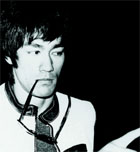
The central interview is the unedited 25-minute black and white Q&A that Lee did on December 9th 1971 for the Pierre Burton Show. Burton was a Canadian author/journalist, and he proves an affable interviewer, even though you’re left with the impression that he doesn’t actually know that much about Lee. Bruce himself is as charismatic as you’d expect, relaxed and friendly if slightly guarded about his future plans. This was an fascinating time for Lee – The Big Boss had made him a superstar in his native Hong Kong, but in the US he was still best known for his TV work than his films. All that would have changed within two years of course, as his death and the posthumously released Enter the Dragon elevated him to world-wide iconic status, but in late ’71 his focus was clearly on breaking the American market through TV. Burton asks him about a show called The Warrior which Lee was scheduled to appear in but Lee is all too aware of the difficulties that a Chinese star faced in winning the lead in a Western show. "It's a risk, and I don't blame them. In the same way, it's like in Hong Kong, if a foreigner came and became a star, if I were the man with the money, I probably would have my own worry of whether or not the acceptance would be there." Lee was right of course; The Warrior was never made, and another show that he was mooted to star in – Kung Fu – became a massive hit with David Carradine in the lead role.
Much of the interview revolves around Lee’s martial arts, both his own philosophy and personal fighting style and the training he provided for a variety of Hollywood stars. Burton seems far more interested in the latter than the former – he frequently mentions the likes of Steve McQueen, James Coburn and James Garner, and at one point even asks Lee who the best fighter was amongst his famous pupils. Nevertheless, Lee is clearly unimpressed by the nature of celebrity: "The word superstar really turns me off, and I'll tell you why. The word ‘star’ man; it's an illusion. It’s something what the public calls you. You should look upon oneself as an actor."
The rest of the DVD is less essential, and fans may have seen/heard much of it before. There are two further interviews with Lee, both conducted for radio, and although Bruce remains as engaging as ever, they reveal nothing about the man that’s not in the Burton programme; indeed some of the answers are repeated word-for-word. There’s also Lee’s 1964 screen test for The Green Hornet. The disc is completed by a new 60 minute interview and profile of William Cheung, a ‘grand master’ of Wing Chung, the style of kung fu in which Lee specialised. This may be for hardcore fans only, but Cheung proves a likeable and interesting man who speaks eloquently about his friendship with Lee and the time they spent training together.
At the end of the day, 25 minutes of new Bruce Lee footage hardly warrants a £17.99 price tag, and casual fans will probably just stick to the great man’s movies. But there’s an undeniable thrill in seeing such a magnetic, iconic figure chat in relaxed surroundings, and a sad reminder of what an amazing talent was lost so soon afterwards.