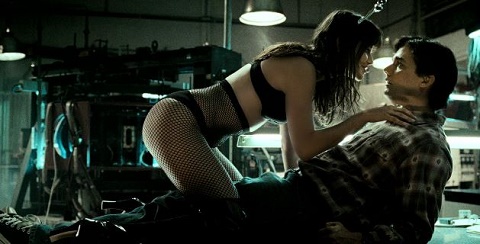
Joao (Wagner Moura) has been known by the nickname Zero ever since a fateful night at university where he was attending to study physics, and he was damn good at it too. What he was not so good at was interacting with other people, so when the attractive Helena (Alinne Moraes) sought him out to help with her own studies in the same field, he could hardly believe his luck. And it did turn out to be too good to be true, a burden he has carried with him for twenty years, still looking back on that night with a mixture of rage, shame and deep sadness – but what if there were a way of fixing all that and offering himself a happier life? He wonders that since his great intelligence in physics might just have built him a time machine…
I know, it sounds corny, a movie where the lead, nerdy guy travels back in time to fix all he feels went wrong in his life; it also sounds very much like Back to the Future, which remained even after all those decades the benchmark in how to handle the whole subject of time paradoxes and using science fiction to help improve things, not to mention setting things right after your temporal meddling has made them go wrong. But writer and director Cláudio Torres managed to put a fresh spin on those conventions by making his story more akin to those fantasies of even further back, charmers like René Clair’s It Happened Tomorrow or even the undoubted classic of Frank Capra’s It’s a Wonderful Life.
So while there was a dose of technology to kick things off, the most important aspect was more the emotional effect on the characters instead of the actual science behind those events, it was enough to know Joao had designed his own equivalent of the DeLorean which looked a lot like the Large Hadron Collider which had been in the news around the point this was produced. The night of shame is revealed in bits and pieces throughout the film, though you have the gist before long: essentially, our geeky hero thought he had an ideal life coming up at the end of term ball where he and Helena consummated their love, so much promise ahead and he was going to be a huge success with his scientific projects.
But then it appeared Helena had a dramatic change of heart and Joao was taken to the stage where the students were performing, and more or less tarred and feathered in front of the crowd, with her adding insult to injury by telling him before everyone she never loved him, and calling him Zero. Baffled and heartbroken, you can see why he cannot allow this memory to rest, and one theme saw us sagely note that it can be the most upsettingly personal reasons that push us towards what we endeavour for in life rather than anything more noble and altruistic. If he hadn’t been so dreadfully rejected, Joao wouldn’t have created his fantastical machine, though on the other hand he might have been considerably happier.
Torres had to teach the boffin a lesson, and he does that by meeting himself. Yes, he goes back in time and confronts his younger incarnation with the sobering knowledge of all that will happen, with Moura putting in a very fine performance that starts aggressively manic, then matures into a wiser, more measured acceptance of his lot. The message was that no matter who you were, be you the most successful person in the world or a complete loser (which the protagonist could lay claim to be both at various points in the narrative), bad shit was going to happen to you, and it could mould you into a better individual or leave you reeling for the rest of your days, the important thing was that these experiences made you what you are. And maybe, if you can cope with what life throws at you, you’ll get by, and if you’re really lucky, it might work out fine for you. The Man from the Future was no mere feelgood, wacky romantic comedy, it grew unexpectedly profound, a very accomplished work from what initially looked shallow and silly. Music by Luca Raele and Maurício Tagliari.