Adolph Zitz (Dom DeLuise) has a problem. As the head of a big Hollywood movie studio, he really should be securing big successes from his stars, but the one star who is truly cleaning up at the box office is not one of his, he's Rudolph Valentino (Matt Collins), renowned across the globe as the top actor in films, not to mention as also the world's greatest lover. Zitz is surrounded by yes men, and little wonder when he reacts violently when confronted with the fact Rainbow Studios is flagging, but when he is strangling his barber who made the mistake of offering a lukewarm response to one of his questions, he hits upon a great idea. How about establishing a contest to find the next romantic idol?
Once Gene Wilder had the success he did as part of the Mel Brooks stable, he felt the need to branch out on his own and make his own comedies in loosely the same style, though he would discover that was not as easy as it looked when they were only modest performers with the audiences. His first try in the director's chair had been The Adventure of Sherlock Holmes' Smarter Brother, which had done okay if not exactly set the world on fire, but encouraged he opted to cash in on the nineteen-seventies craze for looking back at the Golden Age of Hollywood and make a lavish movie set right at the beginning of that. Well, not right at the beginning, slightly afterwards as Valentino is well established as a star when the story starts, so it was around the mid-twenties.
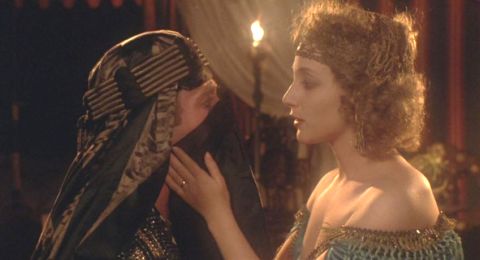
As with many of those nostalgic works, which would often result in notorious flops such as Gable and Lombard, W.C. Fields and Me and Won Ton Ton the Dog Who Saved Hollywood, for a supposed recreation of a past era, there was something kind of... seventies about the way they unfolded, whether it be that odd, soft focus photography to conjure up a bygone age, or the way the details - jokes, in this case - were unmistakably contemporary to the time they were made rather than the time they were evoking. This didn't go as far as Ken Russell did in his Valentino biopic the following year, for one thing Wilder's Valentino, played by then-famous model Collins, is seen fleetingly and doesn't speak a word, fitting perhaps for a silent movie star (though Rudy did record some songs).
The real main character is also named Rudy, Rudy Hickman who calls himself Rudy Valentine to court comparisons with the star and fancies his chances as a screen lover, however he's actually a recently sacked cake shop assistant who is married to the tentative Annie (Carol Kane, made up to look like a twenties actress). Though ostensibly concerned with following him to his hoped for celebrity glory and all the benefits that went with it, really the story was about the faltering love between this couple and how Rudy managed to sort himself out and realise what really matters in life was sticking by the woman he was wedded to, just as she learned to reject the fantasy that she nurtures of becoming Valentino's lover so she can be happy with what she has, a curious way of undercutting the Hollywood fairy tale.
That said, showbusiness as depicted here is so stressful you can well understand why the quiet life settling down with the right partner should be preferable to the hectic existence under the scrutiny of the world, and that's not only the leading men, that's the whole set-up. It was then a pity Wilder's script, having been built on a Felliniesque foundation with potential to say something interesting, even provocative about his chosen profession, chose to fall back on obvious slapstick and forced wackiness; some was genuinely funny, as with Rudy's mistaking his wife for a little moustached man on the train out to Los Angeles, but too often they were big setpiece gags that looked as if too much thought had gone into them, lacking the spontaneity Brooks' style was so adept at. Perhaps we shouldn't compare Wilder's work to his, but the fact was just about everyone else was, and it was true The World's Greatest Lover did not really stand apart from those previous efforts, so while you would acknowledge its heart was in the right place, it was just rather silly and immature, not pointed. Music by John Morris.
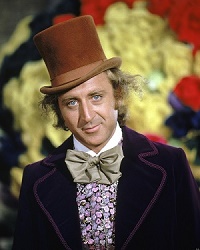
With his striking blue eyes that could go from sensitive to crazed with ease, American actor Gene Wilder was a new sort of screen comic presence when he appeared in his film debut Bonnie and Clyde, a scene-stealer as the undertaker, and he quickly captured audience's interest. This led to him getting hired for Mel Brooks' directorial debut The Producers, where he suited the mayhem perfectly, and would go on to appear in two further Brooks classics, Young Frankenstein and Blazing Saddles.
So this is Gene Wilder's take-off on Fellini's The White Sheik? As I recall he included a dedication to Fellini. I wish they had actually worked together. Gene's warm comic persona might make late period Fellini more accessible while the Maestro could have given Gene a role worthy of his talent. I remember being vaguely charmed by The World's Greatest Lover but have not seen it in something like eighteen years, so maybe it doesn't stand up.
Posted by:
Graeme Clark
Date:
2 Mar 2015
It's not just a dedication to Fellini, it's a grovelling "thank you so much" to Fellini. You know that bit in The Producers, "I'M WET AND I'M HYSTERICAL!!!" etc? That would appear to be the cue for Wilder's character in this, so it has its charms, but it's overcooked for ninety minutes of movie. Better than Won Ton Ton, mind you.




 Display comments