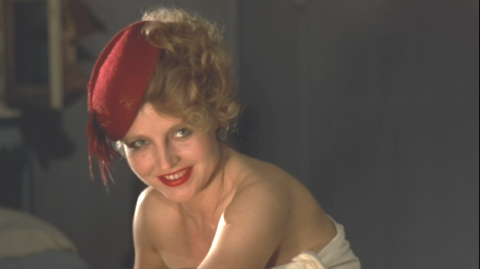
It was a marriage that as far as Maria Braun (Hanna Schygulla) was concerned lasted half a day and one whole night: they were wed at the registry office in the closing days of the Second World War as the bombs and bullets were raining down and her husband Hermann (Klaus Löwitsch) had to tackle the registrar to the ground as he tried to flee for shelter, just so he could get him to sign the certificate. After that, Hermann was sent away, back to the front, and as far as Maria knew he wasn't coming back; soon the war was over, and the dreadful poverty and guilt began in earnest. So what was an attractive young woman to do?
The Marriage of Maria Braun was director Rainer Werner Fassbinder's biggest commercial hit, not bad for something conjured up almost for the hell of it before he embarked on his epic television series Berlin Alexanderplatz and reuniting him with Schygulla, the actress most identified with his oeuvre. She was rewarded with one of her finest roles, and in her way got to embody the whole nation of Germany, quite a weight on one actress's shoulders especially when Fassbinder appeared to have mixed feelings at best about his Fatherland. As part of the German New Wave of the seventies, this was perhaps typical as those artists tried to make sense of what their parents and grandparents had done, the opinion that they were forgetting their shameful past, and the way the nation took its cue, and more, from the U.S.A.
So here was not a film which depicted Maria caught up in the nightmare of the war itself, but rather showed her finding her feet and rebuilding her shattered life in the wake of the carnage, with Fassbinder applying his meticulous way with set design to fashion a convincing sense of period on his relatively limited budget. Everywhere German people are almost literally scraping a living, selling whatever trinkets they have and all for a bit of bread or a packet of cigarettes - in the case of the latter their pathetic debasement for tobacco is indicative of not only how far they have been dragged into the post-war mud, but also plot foreshadowing for the ultimate anti-smoking message later on.
The question of whether we were intended to appreciate Maria's behaviour and understand her was complicated in that Schygulla essayed the role as if she was in no doubt of her own mind a heroine with her movie star beauty, while the activities she indulges in are less than admirable. Now, that would be perfectly sympathetic if Fassbinder was paying pure, unironic tribute to his beloved movies of Douglas Sirk, but it was obfuscated in that he preferred irony, so while to all intents and purposes Maria would embody a nobility by dint of her survival in trying times, the fact remained she sold her body willingly no matter how often she claimed to be forever loyal to her absent husband, and even went as far as murder at one point to clear up a potentially awkward situation.
This was compelling up to a point, but as the plot progressed you could feel Fassbinder losing his grip on his film even as Schygulla kept in it on a fairly even keel. He was tinkering with the script while they were shooting and nursing a massive drugs habit, not to mention perversely alienating everyone in his life, so perhaps it was a minor miracle this was completed at all, one which Maria herself would acknowledge and enjoy. Yet for the average viewer's entertainment purposes, what kept you watching was increasingly to see how, if or when the lead character would get her comeuppance whether you thought she deserved it or not, and given what she represented there could have been many with misgivings which might have explained the ambiguity of the ending, which apparently spells a conclusion to Maria's tale but the beginning of Germany's recovery as we hear the nation's team winning the Football World Cup on the soundtrack. Maybe you could simply take away when times are hard you do what you can to get by, even if that doesn't work out. Music by Peer Raben.
Considered by many to be the highlight of Fassbinder's BRD trilogy, but personally I prefer Lola. There the heroine was no less amoral yet somehow the gleeful atmosphere embracing everyone's foibles made it seem okay.
Posted by:
Graeme Clark
Date:
13 Feb 2013
Though this one does have the bonus of Hanna Schygulla swearing her head off in English during one scene, which is quite amusing.




 Display comments