Johanna Spyri's evergreen children's novel spawned numerous screen incarnations, from the classic Shirley Temple vehicle of 1937 to Isao Takahata's landmark anime version in 1974. A 1968 made-for-TV movie remains infamous as the most complained about programme in American television history since it interrupted the Superbowl, though dodgier versions include Heidi 4 Paws (2008) a CGI cartoon with an all-canine cast featuring the voice of Angela Lansbury and Courage Mountain (1990), an unofficial sequel to Spyri's original tale with a memorably miscast Charlie Sheen as a grownup 'Goat Peter.' Most recently in 2005 we had an entirely respectable British adaptation co-starring Emma Bolger and Max von Sydow. However this German-Swiss co-production is perhaps the definitive re-telling and has a ring of authenticity about it.
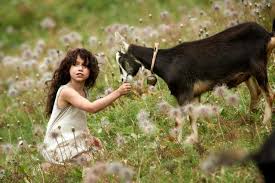
For those unfamiliar with the novel: in the Nineteenth century, eight-year-old Heidi (Anuk Steffen, a real discovery) is abandoned by her self-serving Aunt Dete (Anna Schintz) in a remote region of the Swiss Alps with her grumpy, antisocial Grandfather (Bruno Ganz). He is less than happy to be saddled with her. In time the outgoing, resilient child warms her way into Grandfather's heart. She also befriends equally prickly young goatherd 'Goat Peter' (Quirin Agrippi) who helps inspire her enduring love for the beautiful Alpine wilderness. However, seizing a chance to earn some money, Aunt Dete steals Heidi away from her devastated Grandfather and brings her to a big German town to serve as a live-in playmate for Klara (Isabelle Ottmann), a crippled young girl from a wealthy family, confined to a lonely house at the mercy of her cruel governess Fräulein Rottenmeier (Katharina Schüttler), among the most aptly-named characters in children's literature. Although Heidi's big heart and good cheer lift Klara's spirits, she can't help pining for the Alps.
In the wrong hands Spyri's story can turn out sappy and saccharine. Yet the deft direction of Alain Gsponer working from a spirited script by Petra Biondina Volpe draws forth a deeply moving and lyrical tone with the emphasis on emotional nuance and a certain earthiness, complemented by the pitch-perfect performances. In particular an impassioned turn by the great German star Bruno Ganz really allows the viewer to feel the pain and the loneliness of this embittered old man who initially resents Heidi but is won over by her gentle endurance and good spirit. Of course the star turn comes from newcomer Anuk Steffen who was deservedly chosen from among five hundred young hopefuls. An ebullient, endearingly toothsome young actress, Steffen's engaging, openhearted, naturalistic performance makes it easy to empathize with little Adelheid. She is shunted from pillar to post, prodded, scrutinized and occasionally ridiculed but proves a tough little cookie, getting through it all with kindness, empathy and fortitude plus no small amount of spirit and smarts, two qualities under-emphasized in lesser adaptations.
A major theme in Spyri's novel is the nurturing, transformative power of nature. Specifically the Alpine mountains with all that fresh air, clear water and endless, inviting acres of green grass. Perhaps more than any other adaptation, Gsponer's film emphasizes with some subtlety, skill and lyricism the almost mystical hold the gloriously picturesque region of Grisons has on the nature-loving heroine. Interestingly he also produces the paciest Heidi yet, romping through the story in a manner likely to work to the film's advantage with young viewers if a trifle jarring for those of us with fond memories of the more delicately-paced 1978 Swiss-German television serial with Katia Polletin. To Gsponer's great credit he pulls off a pacy family film without neglecting the subtler psychological undertones to the story, whether Peter's stewing adolescent resentment of Heidi's new friend, Klara's emotional needs, her father's guilt and Heidi's homesickness. Happily screenwriter Volpe does not opt for a simplistic, reactionary message of country life: good, city life: bad. For Heidi discovers there are certain values worth adopting from her city friends including the importance of education as she develops a new love of writing stories. Yet throughout the film, with its emphasis on such giddy pleasures as racing a sled down a snowy hill, runs the message that close contact with the earth, fresh air, wholesome natural food and outdoor exercise is the key to happiness and simply good for the soul.
I can still hear the chirpy theme tune to the 1978 TV series decades after it was run on a loop on 80s BBC children's television, with badly dubbed voices aplenty. Now we need a film of Oskar, Kina and the Laser...




 Display comments